0
U.S. (TOLL FREE)
+1 (315) 215-3225
Automative

0
U.S. (TOLL FREE)
+1 (315) 215-3225
Marine Scrubber Market By Technology (Wet Technology, Dry Technology), By Application (Bulk Carriers, Container Ships, Oil Tankers, Chemical Tankers, Cruises, Others), By Installation (New build, Retrofit): Global Opportunity Analysis and Industry Forecast, 2021-2031
Published Date: 2023-03-01
|
Report Code: ALLI-Auto-2M772
Home | Market Reports | Business & Industrial| Energy & Utilities
Marine Scrubber Market By Technology Wet Technology Dry Technology By Application Bulk Carriers Container Ships Oil Tankers Chemical Tankers Cruises Others By Installation New build Retrofit Global Opportunity Analysis and Industry Forecast 2021 2031
BUY CHAPTERS

Marine Scrubber Market By Technology (Wet Technology, Dry Technology), By Application (Bulk Carriers, Container Ships, Oil Tankers, Chemical Tankers, Cruises, Others), By Installation (New build, Retrofit): Global Opportunity Analysis and Industry Forecast, 2021-2031

Code: ALLI-Auto-2M772
Report
2023-03-01
Pages:411
Allied Market Research
Buy Now with 15% Discount
DESCRIPTION
TABLE OF CONTENT
TABLES & FIGURES

Marine Scrubber Market Size

By technology, the wet technology segment was the highest revenue contributor to the market, and is estimated to reach $ 15,833.5 million by 2031, with a CAGR of 14.9%.

Marine Scrubber Market

Marine Scrubber Market

The global marine scrubber market is expected to experience a significant growth rate of 16.2% from 2022 to 2031, owing to rising adoption of air pollution prevention policies and laws imposed by government to protect environment –
According to the Greek Ship owners Union, 58% of the EU fleet is made up of Greek-owned ships. In 2021, EU shipping dominance Greece has informed the European Commission that, in order to ensure that the European fleet operates on an even playing field in international markets, the industry's inclusion in the bloc's carbon emissions trading plan should be appropriate and strictly implemented. Greek Prime Minister Kyriakos Mitsotakis wrote to the head of the Commission, Ursula von der Leyen, stating that nations should also be reimbursed for the costs their ships would incur and that the money should be used to decarbonize maritime transportation. Greece's development in emission reduction is expected to create demand for emission reduction technology.
The bulk carrier is involved in transportation of raw materials and other bulk commodities. These vessels are primarily used to transport dry bulk cargoes such as coal, iron ore, grain, and other raw materials that are essential to various industries around the world. The market for bulk carriers is driven by global trade, as there is demand for raw materials in different regions.
The workhorses of the merchant fleet, bulk carriers transport the raw materials among other things, allow to house, heat, and feed the populations as well as produce goods. Iron ore, coal, and grain make up the top three bulk commodities. Bauxite, cement, fertilizers, rice, sugar, and timber are examples of other goods. Large amounts of dry cargo can be transported over long distances using bulk carriers, which release 6.5 gCO2/ton nm of carbon dioxide compared to 61 gCO2/ton nm from rail transport. The recent developments in the emission norms are driving the marine industry towards using low-sulfur fuel and scrubbers that can reduce the sulfur emissions from high-sulfur fuel. This will increase the sales for marine scrubber market.
Chemical tankers are cargo vessels used to transport liquid chemicals in large quantities. These tankers are required to comply with the many safety requirements listed and also provide safe transportation of liquid chemicals that are flammable, hazardous, and compatible. Global demand for chemical tankers is being driven by the thriving chemical industry and the expanding production capabilities of chemical producers.
The variety of chemicals that have been sent in bulk has substantially increased over the last few years, and unique ship types are now frequently utilized to meet demand. With expanding markets and Hafnia's enlarged product and chemical tanker fleets, the company had its most successful year ever. They made more than $190 million due to their purchase of the chemical tankers. The development shows the demand for chemical tankers in the market, which leads to increase the sales for marine scrubber market.
In 2021, a cruise company, Norwegian Cruise Line Holdings (NCLH), invested nearly $200 million in exhaust gas cleaning systems (EGCS) retrofits on certain ships across its fleet with the commissioning of EGCS onboard Norwegian Breakaway and Norwegian Getaway. NCLH has finished installing EGCS on 13 Norwegian Cruise Line ships, which equates to almost 70% of their operational capacity. The new technologies are intended to reduce emissions, such as sulfur oxides and particulate matter, significantly while also enhancing air quality, lowering the environmental impact of the ships. This shows the need for the retrofit of the scrubbers will grow as the need to reduce emissions rises.
In the U.S., the Environmental Protection Agency (EPA) has established exhaust pollution limits for marine diesel engines used in a range of marine vessels, from tiny recreational craft to tugboats and substantial ocean-going vessels, depending on size and application. For engines installed aboard American vessels, these domestic emission rules are applicable. For engines installed on foreign vessels and for engines placed on U.S. vessels operating in foreign ports and waters, additional international standards may be applicable. The regulation by the EPA in the U.S. is driving marine vessels to maintain current standards; developments like these will create demand for the marine scrubber market.
In order to reduce emissions from marine vessels, Canada's Salish Sea Marine Emission Reductions (SSMER) initiative studies the consequences of cumulative emissions. This is the outcome of the Trans Mountain Expansion (TMX) project reconsideration report from the National Energy Board, which is now the Canada Energy Regulator. The Salish Sea Marine Environmental Research Program (SSMER) focuses on the overall consequences of air pollution and greenhouse gas emissions from marine vessels operating in the Salish Sea. Additionally, it considers how to lessen present and future emissions from marine vessels. Initiatives and programs like this show Canada's interest in reducing emissions from the sea. This will increase demand for the marine scrubber market in the future.
Mexico is ideally situated to develop a significant zero-carbon shipping fuel business due to its extensive renewable energy potential and accessibility to busy shipping routes. This involves offering zero-carbon fuels produced from renewable sources, visiting Mexican ports with shipping vessels, and maybe exporting the fuel as a valuable commodity on the world market. In addition to enhancing energy security by utilizing local resources, this new zero-carbon fuels sector might also boost Mexico's low-carbon economy by supporting the decarbonization of other sectors and generating a wide variety of jobs. Zero carbon emissions and a reduction in air emissions are the goals set by most countries; therefore, such developments in Mexico create market opportunities for the tools and devices that help in the reduction of air emissions and other carbon content.
The government of Germany has announced its intention to set aside millions of euros to encourage the digitalization of shipbuilding and the creation of zero-emission vessels. The grant agreement for the collaboration for the digitization of shipbuilding under the management of Ostseestaal GmbH was handed over to them on August 18, 2022, by Claudia Müller, Federal Government Coordinator for the Maritime Industry and Tourism. The grant amount was €1.3 million ($1.3 million), according to the Federal Ministry for Economic Affairs and Climate Action, which is funding the project (BMWK). BMWK assists the maritime sector in developing innovative products in the blooming disciplines of shipbuilding, offshore energy, and marine technology through the Maritime Research Program and the funding line Real-Time Technology for Maritime Security. Funding initiatives with an annual level of funding of roughly €60 million seek to boost the maritime industry's innovative capacity in global competition and advance climate and environmental protection. The initiative by Germany creates a demand for marine scrubber market.
Key Market Insights
However, dry technology segment is estimated to hold a CAGR of 22.6% during the forecast period.
By application, the bulk carriers segment dominated the global market, and is estimated to reach $ 6,646.8 million by 2031, with a CAGR of 15.9%. However, the cruises segment is expected to be the fastest growing segment with the CAGR of 21.0% during the forecast period.
By installation, retrofit segment was the highest revenue contributor to the market, with $ 3,124.0 million in 2021, and is estimated to reach $ 11,167.1 million by 2031, with a CAGR of 14.6%.
By region, Asia-Pacific was the highest revenue contributor, accounting for $ 2,109.6 million in 2021, and is estimated to reach $ 8,022.9 million by 2031, with a CAGR of 15.3%.

Overview

A marine scrubber, also known as exhaust gas cleaning system (EGCS), is a technology used in the maritime industry to reduce the emission of harmful gases and particulate matter from the exhaust gases of ships' engines. The system works by removing sulfur oxides (SOx), nitrogen oxides (NOx), and other pollutants from the exhaust gases before they are released into the environment.
Marine scrubbers, or exhaust gas cleaning systems, are used to remove particulate matter and hazardous components, such as sulfur oxides (SOx) and nitrogen oxides (NOx), from the exhaust gases created as a result of combustion processes in marine engines to perform pollution control. The alkaline scrubbing material in the scrubber is pushed through exhaust gas streams to neutralize the gases’ acidic nature and remove any particle debris from the exhaust. The used cleaning agent is subsequently collected with wash water, which can either be put in storage or disposed of right away as effluent. The mechanism discharges the cleansed exhaust into the atmosphere. Marine scrubbers employ lime or caustic soda to de-sulfate the water, which results in sulfate-based salts that can be easily discarded because they don't harm the environment. Due to their alkaline nature, scrubbers may use sea water, fresh water with additional calcium or sodium sorbents, or pellets of hydrated lime as the scrubbing medium.
The Asia-Pacific market is the most promising market due to countries such as China and India, whose economies are increasing as their trade with other regions grows and the countries are becoming self-sufficient. Countries such as Australia and South Korea strictly follow the norms, creating demand for the emission reduction products. The rest of Asia-Pacific countries follow the mission of zero emissions; therefore, these countries are also expected to give rise to exhaust gas cleaning systems.
In line with Beijing's objective to establish a regional bunkering hub, China's exports of clean marine fuels increased by 24% in 2021 compared to the previous year. According to figures released by the General Administration of Customs, exports of very low-sulfur fuel oil (VLSFO), which must have a maximum sulphate concentration of 0.5% to abide by IMO emission regulations, reached 19.19 million tons. In contrast, 15.47 million tons were produced in 2020, the year China began to abide by IMO emission regulations. China sold 1.3 million tons of the clean marine fuel for the month of December alone. This is a decrease from the 1.75 million tons sold in November and lower than the 2.47 million tons sold during the same period in 2020. The export business in China is creating more demand of the marine vessels, thus creating more demand for air emission reduction products.
In Japan, despite the COVID-19 outbreak, the technological company Wärtsilä delivered a record-breaking number of scrubbers in 2020. This highlights the persistent interest in exhaust gas abatement devices as long-term fixes for the global fleet. A sizing order for the installation of a 25 MW scrubber aboard a brand-new Japanese-owned Very Large Crude Carrier (VLCC) was placed with the Japanese shipyard Japan Marine Union (JMU) in November 2020. The purchase of this brand-new VLCC demonstrates the long-term viability of technologies for exhaust gas treatment. The system will be set up to operate in an open loop. The demand of scrubbers for marine vessels shows how important scrubbers are as full-lifecycle assets.
India is complying with the rules framed by the International Maritime Organization (IMO) in 2020 regarding the emission in the international waters. In 2023, a notification from India's Directorate General of Shipping noted that several of the nation's ports currently do not allow the use of scrubbers. According to the Directorate, some Indian ports do not allow ships to berth even when they are using scrubbers to comply with IMO 2020. Prior to berthing, these ports urge the ships to switch to low-sulfur fuel oil. the process that must be followed by all Indian ports to comply with the IMO 2020 Sulfur Cap Requirements for Merchant Ships was made known to the Director General of Shipping. The execution of strict rules and regulation making it mandatory to have a marine scrubber in the ships, thus creating demand for the marine scrubbers in the market.
Asia Pacific countries are also working towards the carbon neutrality and reduction of air emission. Malaysia's carbon policy depends on carbon reduction. The environmental and climate change effects of the sector could be addressed by supporting carbon reduction measures. To ensure safe and secure shipping, Malaysia has accepted approximately half of the IMO treaties, with marine environmental protection being a top priority. While introducing the 12th Malaysia Plan (12MP), Prime Minister Datuk Seri Ismail Sabri Yaakob emphasized that the government's goal is to become carbon neutral by 2050. Another country New Zealand ratified the IMO treaty known as MARPOL Annex VI on May 26, 2022. The standards of Annex VI are implemented into New Zealand law by the Marine Protection Rules Part 199: Prevention of Air Pollution from Ships (Part 199). Progressive implementation of Part 199 begins on August 26, 2022. From May 26, 2022, New Zealand will be a party to the IMO Convention for the Prevention of Pollution from Ships (MARPOL), Annex VI. These developments in the Asia Pacific region are expected to create market for the emission reduction tools and devices.
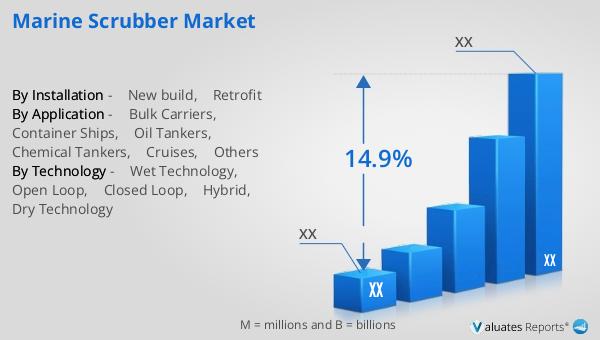
The marine scrubber market is segmented on the basis of technology type, application, installation, and region. On the basis of technology type, it is divided into wet technology, and dry technology. On the basis of application, it is classified into bulk carriers, container ships, oil tankers, chemical tankers, cruises, and others. On the basis of Installation, it is classified into new build, and retrofit. On the basis of region, the market is analyzed across North America, Europe, Asia-Pacific, and LAMEA. Growth drivers, restraints, and opportunities are explained in the study to better understand the market dynamics. This study further highlights key areas of investment. In addition, it includes Porter’s five forces analysis to understand the competitive scenario of the industry and the role of each stakeholder. The study features strategies adopted by key market players to maintain their foothold in the market.
Companies have adopted product development, partnership, and product launch as their key development strategies in the Marine scrubber market. The key players operating in this market are Alfa Laval AB, Andritz AG, Fuji Electric Co., Ltd., GEA Group AG, Kwang Sung Co Ltd., Mitsubishi Heavy Industries Ltd., Pacific Green Marine Technologies, Valmet Oyj, Wärtsilä Oyj Abp, and Yara International ASA.

Key Benefits For Stakeholders

●This report provides a quantitative analysis of the market segments, current trends, estimations, and dynamics of the marine scrubber market analysis from 2021 to 2031 to identify the prevailing marine scrubber market opportunities.
●The market research is offered along with information related to key drivers, restraints, and opportunities.
●Porter's five forces analysis highlights the potency of buyers and suppliers to enable stakeholders make profit-oriented business decisions and strengthen their supplier-buyer network.
●In-depth analysis of the marine scrubber market segmentation assists to determine the prevailing market opportunities.
●Major countries in each region are mapped according to their revenue contribution to the global market.
●Market player positioning facilitates benchmarking and provides a clear understanding of the present position of the market players.
●The report includes the analysis of the regional as well as global marine scrubber market trends, key players, market segments, application areas, and market growth strategies.
Key Market Segments
○ Yara International AS

Scope of Marine Scrubber Market Report

Report Metric Details
Report Name Marine Scrubber Market
CAGR 14.9%
By Technology ● Wet Technology
○ Open Loop
○ Closed Loop
○ Hybrid
● Dry Technology
By Application ● Bulk Carriers
● Container Ships
● Oil Tankers
● Chemical Tankers
● Cruises
● Others
By Installation ● New build
● Retrofit
By Region
  • North America (United States, Canada)
  • Europe (Germany, France, UK, Italy, Russia) Rest of Europe
  • Nordic Countries
  • Asia-Pacific (China, Japan, South Korea)
  • Southeast Asia (India, Australia)
  • Rest of Asia
  • Latin America (Mexico, Brazil)
  • Rest of Latin America
  • Middle East & Africa (Turkey, Saudi Arabia, UAE, Rest of MEA)
Forecast units USD million in value
Report coverage Revenue and volume forecast, company share, competitive landscape, growth factors and trends

FAQ for this report

What are the Application segmentation covered in the Marine Scrubber Market report?

Ans: The Applications covered in the Marine Scrubber Market report are ● Bulk Carriers, ● Container Ships, ● Oil Tankers, ● Chemical Tankers, ● Cruises, ● Others

CHAPTER 1: INTRODUCTION
1.1. Report description
1.2. Key market segments
1.3. Key benefits to the stakeholders
1.4. Research Methodology
1.4.1. Primary research
1.4.2. Secondary research
1.4.3. Analyst tools and models
CHAPTER 2: EXECUTIVE SUMMARY
2.1. CXO Perspective
CHAPTER 3: MARKET OVERVIEW
3.1. Market definition and scope
3.2. Key findings
3.2.1. Top impacting factors
3.2.2. Top investment pockets
3.3. Porter’s five forces analysis
3.3.1. Bargaining power of suppliers
3.3.2. Bargaining power of buyers
3.3.3. Threat of substitutes
3.3.4. Threat of new entrants
3.3.5. Intensity of rivalry
3.4. Market dynamics
3.4.1. Drivers
3.4.1.1. Implementation of sulfur 2020 rule
3.4.1.2. Air pollution prevention policies and laws imposed by government to protect environment
3.4.1.3. Rising international marine freight transport
3.4.1.4. Increase in demand for cargo transportation through ships
3.4.2. Restraints
3.4.2.1. Strict regulatory policies for disposal of contaminated effluents from scrubber system
3.4.2.2. High installation and maintenance cost of marine scrubber
3.4.3. Opportunities
3.4.3.1. Rise of e-commerce and online trade
3.4.3.2. Growing demand for Retrofit application as ship owner race against time for complying with Impeding regulations
3.5. COVID-19 Impact Analysis on the market
CHAPTER 4: MARINE SCRUBBER MARKET, BY TECHNOLOGY
4.1. Overview
4.1.1. Market size and forecast
4.2. Wet Technology
4.2.1. Key market trends, growth factors and opportunities
4.2.2. Market size and forecast, by region
4.2.3. Market share analysis by country
4.2.4. Wet Technology Marine Scrubber Market by Open Loop
4.2.5. Wet Technology Marine Scrubber Market by Closed Loop
4.2.6. Wet Technology Marine Scrubber Market by Hybrid
4.3. Dry Technology
4.3.1. Key market trends, growth factors and opportunities
4.3.2. Market size and forecast, by region
4.3.3. Market share analysis by country
CHAPTER 5: MARINE SCRUBBER MARKET, BY APPLICATION
5.1. Overview
5.1.1. Market size and forecast
5.2. Bulk Carriers
5.2.1. Key market trends, growth factors and opportunities
5.2.2. Market size and forecast, by region
5.2.3. Market share analysis by country
5.3. Container Ships
5.3.1. Key market trends, growth factors and opportunities
5.3.2. Market size and forecast, by region
5.3.3. Market share analysis by country
5.4. Oil Tankers
5.4.1. Key market trends, growth factors and opportunities
5.4.2. Market size and forecast, by region
5.4.3. Market share analysis by country
5.5. Chemical Tankers
5.5.1. Key market trends, growth factors and opportunities
5.5.2. Market size and forecast, by region
5.5.3. Market share analysis by country
5.6. Cruises
5.6.1. Key market trends, growth factors and opportunities
5.6.2. Market size and forecast, by region
5.6.3. Market share analysis by country
5.7. Others
5.7.1. Key market trends, growth factors and opportunities
5.7.2. Market size and forecast, by region
5.7.3. Market share analysis by country
CHAPTER 6: MARINE SCRUBBER MARKET, BY INSTALLATION
6.1. Overview
6.1.1. Market size and forecast
6.2. New build
6.2.1. Key market trends, growth factors and opportunities
6.2.2. Market size and forecast, by region
6.2.3. Market share analysis by country
6.3. Retrofit
6.3.1. Key market trends, growth factors and opportunities
6.3.2. Market size and forecast, by region
6.3.3. Market share analysis by country
CHAPTER 7: MARINE SCRUBBER MARKET, BY REGION
7.1. Overview
7.1.1. Market size and forecast By Region
7.2. North America
7.2.1. Key trends and opportunities
7.2.2. Market size and forecast, by Technology
7.2.3. Market size and forecast, by Application
7.2.4. Market size and forecast, by Installation
7.2.5. Market size and forecast, by country
7.2.5.1. U.S.
7.2.5.1.1. Key market trends, growth factors and opportunities
7.2.5.1.2. Market size and forecast, by Technology
7.2.5.1.3. Market size and forecast, by Application
7.2.5.1.4. Market size and forecast, by Installation
7.2.5.2. Canada
7.2.5.2.1. Key market trends, growth factors and opportunities
7.2.5.2.2. Market size and forecast, by Technology
7.2.5.2.3. Market size and forecast, by Application
7.2.5.2.4. Market size and forecast, by Installation
7.2.5.3. Mexico
7.2.5.3.1. Key market trends, growth factors and opportunities
7.2.5.3.2. Market size and forecast, by Technology
7.2.5.3.3. Market size and forecast, by Application
7.2.5.3.4. Market size and forecast, by Installation
7.3. Europe
7.3.1. Key trends and opportunities
7.3.2. Market size and forecast, by Technology
7.3.3. Market size and forecast, by Application
7.3.4. Market size and forecast, by Installation
7.3.5. Market size and forecast, by country
7.3.5.1. UK
7.3.5.1.1. Key market trends, growth factors and opportunities
7.3.5.1.2. Market size and forecast, by Technology
7.3.5.1.3. Market size and forecast, by Application
7.3.5.1.4. Market size and forecast, by Installation
7.3.5.2. Germany
7.3.5.2.1. Key market trends, growth factors and opportunities
7.3.5.2.2. Market size and forecast, by Technology
7.3.5.2.3. Market size and forecast, by Application
7.3.5.2.4. Market size and forecast, by Installation
7.3.5.3. Italy
7.3.5.3.1. Key market trends, growth factors and opportunities
7.3.5.3.2. Market size and forecast, by Technology
7.3.5.3.3. Market size and forecast, by Application
7.3.5.3.4. Market size and forecast, by Installation
7.3.5.4. France
7.3.5.4.1. Key market trends, growth factors and opportunities
7.3.5.4.2. Market size and forecast, by Technology
7.3.5.4.3. Market size and forecast, by Application
7.3.5.4.4. Market size and forecast, by Installation
7.3.5.5. Greece
7.3.5.5.1. Key market trends, growth factors and opportunities
7.3.5.5.2. Market size and forecast, by Technology
7.3.5.5.3. Market size and forecast, by Application
7.3.5.5.4. Market size and forecast, by Installation
7.3.5.6. Rest of Europe
7.3.5.6.1. Key market trends, growth factors and opportunities
7.3.5.6.2. Market size and forecast, by Technology
7.3.5.6.3. Market size and forecast, by Application
7.3.5.6.4. Market size and forecast, by Installation
7.4. Asia-Pacific
7.4.1. Key trends and opportunities
7.4.2. Market size and forecast, by Technology
7.4.3. Market size and forecast, by Application
7.4.4. Market size and forecast, by Installation
7.4.5. Market size and forecast, by country
7.4.5.1. China
7.4.5.1.1. Key market trends, growth factors and opportunities
7.4.5.1.2. Market size and forecast, by Technology
7.4.5.1.3. Market size and forecast, by Application
7.4.5.1.4. Market size and forecast, by Installation
7.4.5.2. Japan
7.4.5.2.1. Key market trends, growth factors and opportunities
7.4.5.2.2. Market size and forecast, by Technology
7.4.5.2.3. Market size and forecast, by Application
7.4.5.2.4. Market size and forecast, by Installation
7.4.5.3. India
7.4.5.3.1. Key market trends, growth factors and opportunities
7.4.5.3.2. Market size and forecast, by Technology
7.4.5.3.3. Market size and forecast, by Application
7.4.5.3.4. Market size and forecast, by Installation
7.4.5.4. Australia
7.4.5.4.1. Key market trends, growth factors and opportunities
7.4.5.4.2. Market size and forecast, by Technology
7.4.5.4.3. Market size and forecast, by Application
7.4.5.4.4. Market size and forecast, by Installation
7.4.5.5. South Korea
7.4.5.5.1. Key market trends, growth factors and opportunities
7.4.5.5.2. Market size and forecast, by Technology
7.4.5.5.3. Market size and forecast, by Application
7.4.5.5.4. Market size and forecast, by Installation
7.4.5.6. Rest of Asia-Pacific
7.4.5.6.1. Key market trends, growth factors and opportunities
7.4.5.6.2. Market size and forecast, by Technology
7.4.5.6.3. Market size and forecast, by Application
7.4.5.6.4. Market size and forecast, by Installation
7.5. LAMEA
7.5.1. Key trends and opportunities
7.5.2. Market size and forecast, by Technology
7.5.3. Market size and forecast, by Application
7.5.4. Market size and forecast, by Installation
7.5.5. Market size and forecast, by country
7.5.5.1. Latin America
7.5.5.1.1. Key market trends, growth factors and opportunities
7.5.5.1.2. Market size and forecast, by Technology
7.5.5.1.3. Market size and forecast, by Application
7.5.5.1.4. Market size and forecast, by Installation
7.5.5.2. Middle East
7.5.5.2.1. Key market trends, growth factors and opportunities
7.5.5.2.2. Market size and forecast, by Technology
7.5.5.2.3. Market size and forecast, by Application
7.5.5.2.4. Market size and forecast, by Installation
7.5.5.3. Africa
7.5.5.3.1. Key market trends, growth factors and opportunities
7.5.5.3.2. Market size and forecast, by Technology
7.5.5.3.3. Market size and forecast, by Application
7.5.5.3.4. Market size and forecast, by Installation
CHAPTER 8: COMPETITIVE LANDSCAPE
8.1. Introduction
8.2. Top winning strategies
8.3. Product Mapping of Top 10 Player
8.4. Competitive Dashboard
8.5. Competitive Heatmap
8.6. Top player positioning, 2021
CHAPTER 9: COMPANY PROFILES
9.1. Alfa Laval
9.1.1. Company overview
9.1.2. Key Executives
9.1.3. Company snapshot
9.1.4. Operating business segments
9.1.5. Product portfolio
9.1.6. Business performance
9.1.7. Key strategic moves and developments
9.2. ANDRITZ
9.2.1. Company overview
9.2.2. Key Executives
9.2.3. Company snapshot
9.2.4. Operating business segments
9.2.5. Product portfolio
9.2.6. Business performance
9.3. Fuji Electric Co., Ltd.
9.3.1. Company overview
9.3.2. Key Executives
9.3.3. Company snapshot
9.3.4. Operating business segments
9.3.5. Product portfolio
9.3.6. Business performance
9.4. GEA Group Aktiengesellschaft
9.4.1. Company overview
9.4.2. Key Executives
9.4.3. Company snapshot
9.4.4. Operating business segments
9.4.5. Product portfolio
9.4.6. Business performance
9.5. KwangSung
9.5.1. Company overview
9.5.2. Key Executives
9.5.3. Company snapshot
9.5.4. Operating business segments
9.5.5. Product portfolio
9.6. Mitsubishi Heavy Industries, Ltd.
9.6.1. Company overview
9.6.2. Key Executives
9.6.3. Company snapshot
9.6.4. Operating business segments
9.6.5. Product portfolio
9.6.6. Business performance
9.7. Pacific Green Group
9.7.1. Company overview
9.7.2. Key Executives
9.7.3. Company snapshot
9.7.4. Operating business segments
9.7.5. Product portfolio
9.7.6. Business performance
9.8. Valmet
9.8.1. Company overview
9.8.2. Key Executives
9.8.3. Company snapshot
9.8.4. Operating business segments
9.8.5. Product portfolio
9.8.6. Business performance
9.8.7. Key strategic moves and developments
9.9. Wartsila
9.9.1. Company overview
9.9.2. Key Executives
9.9.3. Company snapshot
9.9.4. Operating business segments
9.9.5. Product portfolio
9.9.6. Business performance
9.9.7. Key strategic moves and developments
9.10. Yara International ASA
9.10.1. Company overview
9.10.2. Key Executives
9.10.3. Company snapshot
9.10.4. Operating business segments
9.10.5. Product portfolio
9.10.6. Business performance
9.10.7. Key strategic moves and development
LIST OF TABLES
TABLE 01. GLOBAL MARINE SCRUBBER MARKET, BY TECHNOLOGY, 2021-2031 ($MILLION)
TABLE 02. MARINE SCRUBBER MARKET FOR WET TECHNOLOGY, BY REGION, 2021-2031 ($MILLION)
TABLE 03. GLOBAL WET TECHNOLOGY MARINE SCRUBBER MARKET, BY OPEN LOOP, 2021-2031 ($MILLION)
TABLE 04. GLOBAL WET TECHNOLOGY MARINE SCRUBBER MARKET, BY CLOSED LOOP, 2021-2031 ($MILLION)
TABLE 05. GLOBAL WET TECHNOLOGY MARINE SCRUBBER MARKET, BY HYBRID, 2021-2031 ($MILLION)
TABLE 06. MARINE SCRUBBER MARKET FOR DRY TECHNOLOGY, BY REGION, 2021-2031 ($MILLION)
TABLE 07. GLOBAL MARINE SCRUBBER MARKET, BY APPLICATION, 2021-2031 ($MILLION)
TABLE 08. MARINE SCRUBBER MARKET FOR BULK CARRIERS, BY REGION, 2021-2031 ($MILLION)
TABLE 09. MARINE SCRUBBER MARKET FOR CONTAINER SHIPS, BY REGION, 2021-2031 ($MILLION)
TABLE 10. MARINE SCRUBBER MARKET FOR OIL TANKERS, BY REGION, 2021-2031 ($MILLION)
TABLE 11. MARINE SCRUBBER MARKET FOR CHEMICAL TANKERS, BY REGION, 2021-2031 ($MILLION)
TABLE 12. MARINE SCRUBBER MARKET FOR CRUISES, BY REGION, 2021-2031 ($MILLION)
TABLE 13. MARINE SCRUBBER MARKET FOR OTHERS, BY REGION, 2021-2031 ($MILLION)
TABLE 14. GLOBAL MARINE SCRUBBER MARKET, BY INSTALLATION, 2021-2031 ($MILLION)
TABLE 15. MARINE SCRUBBER MARKET FOR NEW BUILD, BY REGION, 2021-2031 ($MILLION)
TABLE 16. MARINE SCRUBBER MARKET FOR RETROFIT, BY REGION, 2021-2031 ($MILLION)
TABLE 17. MARINE SCRUBBER MARKET, BY REGION, 2021-2031 ($MILLION)
TABLE 18. NORTH AMERICA MARINE SCRUBBER MARKET, BY TECHNOLOGY, 2021-2031 ($MILLION)
TABLE 19. NORTH AMERICA MARINE SCRUBBER MARKET, BY APPLICATION, 2021-2031 ($MILLION)
TABLE 20. NORTH AMERICA MARINE SCRUBBER MARKET, BY INSTALLATION, 2021-2031 ($MILLION)
TABLE 21. NORTH AMERICA MARINE SCRUBBER MARKET, BY COUNTRY, 2021-2031 ($MILLION)
TABLE 22. U.S. MARINE SCRUBBER MARKET, BY TECHNOLOGY, 2021-2031 ($MILLION)
TABLE 23. U.S. MARINE SCRUBBER MARKET, BY APPLICATION, 2021-2031 ($MILLION)
TABLE 24. U.S. MARINE SCRUBBER MARKET, BY INSTALLATION, 2021-2031 ($MILLION)
TABLE 25. CANADA MARINE SCRUBBER MARKET, BY TECHNOLOGY, 2021-2031 ($MILLION)
TABLE 26. CANADA MARINE SCRUBBER MARKET, BY APPLICATION, 2021-2031 ($MILLION)
TABLE 27. CANADA MARINE SCRUBBER MARKET, BY INSTALLATION, 2021-2031 ($MILLION)
TABLE 28. MEXICO MARINE SCRUBBER MARKET, BY TECHNOLOGY, 2021-2031 ($MILLION)
TABLE 29. MEXICO MARINE SCRUBBER MARKET, BY APPLICATION, 2021-2031 ($MILLION)
TABLE 30. MEXICO MARINE SCRUBBER MARKET, BY INSTALLATION, 2021-2031 ($MILLION)
TABLE 31. EUROPE MARINE SCRUBBER MARKET, BY TECHNOLOGY, 2021-2031 ($MILLION)
TABLE 32. EUROPE MARINE SCRUBBER MARKET, BY APPLICATION, 2021-2031 ($MILLION)
TABLE 33. EUROPE MARINE SCRUBBER MARKET, BY INSTALLATION, 2021-2031 ($MILLION)
TABLE 34. EUROPE MARINE SCRUBBER MARKET, BY COUNTRY, 2021-2031 ($MILLION)
TABLE 35. UK MARINE SCRUBBER MARKET, BY TECHNOLOGY, 2021-2031 ($MILLION)
TABLE 36. UK MARINE SCRUBBER MARKET, BY APPLICATION, 2021-2031 ($MILLION)
TABLE 37. UK MARINE SCRUBBER MARKET, BY INSTALLATION, 2021-2031 ($MILLION)
TABLE 38. GERMANY MARINE SCRUBBER MARKET, BY TECHNOLOGY, 2021-2031 ($MILLION)
TABLE 39. GERMANY MARINE SCRUBBER MARKET, BY APPLICATION, 2021-2031 ($MILLION)
TABLE 40. GERMANY MARINE SCRUBBER MARKET, BY INSTALLATION, 2021-2031 ($MILLION)
TABLE 41. ITALY MARINE SCRUBBER MARKET, BY TECHNOLOGY, 2021-2031 ($MILLION)
TABLE 42. ITALY MARINE SCRUBBER MARKET, BY APPLICATION, 2021-2031 ($MILLION)
TABLE 43. ITALY MARINE SCRUBBER MARKET, BY INSTALLATION, 2021-2031 ($MILLION)
TABLE 44. FRANCE MARINE SCRUBBER MARKET, BY TECHNOLOGY, 2021-2031 ($MILLION)
TABLE 45. FRANCE MARINE SCRUBBER MARKET, BY APPLICATION, 2021-2031 ($MILLION)
TABLE 46. FRANCE MARINE SCRUBBER MARKET, BY INSTALLATION, 2021-2031 ($MILLION)
TABLE 47. GREECE MARINE SCRUBBER MARKET, BY TECHNOLOGY, 2021-2031 ($MILLION)
TABLE 48. GREECE MARINE SCRUBBER MARKET, BY APPLICATION, 2021-2031 ($MILLION)
TABLE 49. GREECE MARINE SCRUBBER MARKET, BY INSTALLATION, 2021-2031 ($MILLION)
TABLE 50. REST OF EUROPE MARINE SCRUBBER MARKET, BY TECHNOLOGY, 2021-2031 ($MILLION)
TABLE 51. REST OF EUROPE MARINE SCRUBBER MARKET, BY APPLICATION, 2021-2031 ($MILLION)
TABLE 52. REST OF EUROPE MARINE SCRUBBER MARKET, BY INSTALLATION, 2021-2031 ($MILLION)
TABLE 53. ASIA-PACIFIC MARINE SCRUBBER MARKET, BY TECHNOLOGY, 2021-2031 ($MILLION)
TABLE 54. ASIA-PACIFIC MARINE SCRUBBER MARKET, BY APPLICATION, 2021-2031 ($MILLION)
TABLE 55. ASIA-PACIFIC MARINE SCRUBBER MARKET, BY INSTALLATION, 2021-2031 ($MILLION)
TABLE 56. ASIA-PACIFIC MARINE SCRUBBER MARKET, BY COUNTRY, 2021-2031 ($MILLION)
TABLE 57. CHINA MARINE SCRUBBER MARKET, BY TECHNOLOGY, 2021-2031 ($MILLION)
TABLE 58. CHINA MARINE SCRUBBER MARKET, BY APPLICATION, 2021-2031 ($MILLION)
TABLE 59. CHINA MARINE SCRUBBER MARKET, BY INSTALLATION, 2021-2031 ($MILLION)
TABLE 60. JAPAN MARINE SCRUBBER MARKET, BY TECHNOLOGY, 2021-2031 ($MILLION)
TABLE 61. JAPAN MARINE SCRUBBER MARKET, BY APPLICATION, 2021-2031 ($MILLION)
TABLE 62. JAPAN MARINE SCRUBBER MARKET, BY INSTALLATION, 2021-2031 ($MILLION)
TABLE 63. INDIA MARINE SCRUBBER MARKET, BY TECHNOLOGY, 2021-2031 ($MILLION)
TABLE 64. INDIA MARINE SCRUBBER MARKET, BY APPLICATION, 2021-2031 ($MILLION)
TABLE 65. INDIA MARINE SCRUBBER MARKET, BY INSTALLATION, 2021-2031 ($MILLION)
TABLE 66. AUSTRALIA MARINE SCRUBBER MARKET, BY TECHNOLOGY, 2021-2031 ($MILLION)
TABLE 67. AUSTRALIA MARINE SCRUBBER MARKET, BY APPLICATION, 2021-2031 ($MILLION)
TABLE 68. AUSTRALIA MARINE SCRUBBER MARKET, BY INSTALLATION, 2021-2031 ($MILLION)
TABLE 69. SOUTH KOREA MARINE SCRUBBER MARKET, BY TECHNOLOGY, 2021-2031 ($MILLION)
TABLE 70. SOUTH KOREA MARINE SCRUBBER MARKET, BY APPLICATION, 2021-2031 ($MILLION)
TABLE 71. SOUTH KOREA MARINE SCRUBBER MARKET, BY INSTALLATION, 2021-2031 ($MILLION)
TABLE 72. REST OF ASIA-PACIFIC MARINE SCRUBBER MARKET, BY TECHNOLOGY, 2021-2031 ($MILLION)
TABLE 73. REST OF ASIA-PACIFIC MARINE SCRUBBER MARKET, BY APPLICATION, 2021-2031 ($MILLION)
TABLE 74. REST OF ASIA-PACIFIC MARINE SCRUBBER MARKET, BY INSTALLATION, 2021-2031 ($MILLION)
TABLE 75. LAMEA MARINE SCRUBBER MARKET, BY TECHNOLOGY, 2021-2031 ($MILLION)
TABLE 76. LAMEA MARINE SCRUBBER MARKET, BY APPLICATION, 2021-2031 ($MILLION)
TABLE 77. LAMEA MARINE SCRUBBER MARKET, BY INSTALLATION, 2021-2031 ($MILLION)
TABLE 78. LAMEA MARINE SCRUBBER MARKET, BY COUNTRY, 2021-2031 ($MILLION)
TABLE 79. LATIN AMERICA MARINE SCRUBBER MARKET, BY TECHNOLOGY, 2021-2031 ($MILLION)
TABLE 80. LATIN AMERICA MARINE SCRUBBER MARKET, BY APPLICATION, 2021-2031 ($MILLION)
TABLE 81. LATIN AMERICA MARINE SCRUBBER MARKET, BY INSTALLATION, 2021-2031 ($MILLION)
TABLE 82. MIDDLE EAST MARINE SCRUBBER MARKET, BY TECHNOLOGY, 2021-2031 ($MILLION)
TABLE 83. MIDDLE EAST MARINE SCRUBBER MARKET, BY APPLICATION, 2021-2031 ($MILLION)
TABLE 84. MIDDLE EAST MARINE SCRUBBER MARKET, BY INSTALLATION, 2021-2031 ($MILLION)
TABLE 85. AFRICA MARINE SCRUBBER MARKET, BY TECHNOLOGY, 2021-2031 ($MILLION)
TABLE 86. AFRICA MARINE SCRUBBER MARKET, BY APPLICATION, 2021-2031 ($MILLION)
TABLE 87. AFRICA MARINE SCRUBBER MARKET, BY INSTALLATION, 2021-2031 ($MILLION)
TABLE 88. ALFA LAVAL: KEY EXECUTIVES
TABLE 89. ALFA LAVAL: COMPANY SNAPSHOT
TABLE 90. ALFA LAVAL: PRODUCT SEGMENTS
TABLE 91. ALFA LAVAL: PRODUCT PORTFOLIO
TABLE 92. ALFA LAVAL: KEY STRATERGIES
TABLE 93. ANDRITZ: KEY EXECUTIVES
TABLE 94. ANDRITZ: COMPANY SNAPSHOT
TABLE 95. ANDRITZ: PRODUCT SEGMENTS
TABLE 96. ANDRITZ: PRODUCT PORTFOLIO
TABLE 97. FUJI ELECTRIC CO., LTD.: KEY EXECUTIVES
TABLE 98. FUJI ELECTRIC CO., LTD.: COMPANY SNAPSHOT
TABLE 99. FUJI ELECTRIC CO., LTD.: PRODUCT SEGMENTS
TABLE 100. FUJI ELECTRIC CO., LTD.: PRODUCT PORTFOLIO
TABLE 101. GEA GROUP AKTIENGESELLSCHAFT: KEY EXECUTIVES
TABLE 102. GEA GROUP AKTIENGESELLSCHAFT: COMPANY SNAPSHOT
TABLE 103. GEA GROUP AKTIENGESELLSCHAFT: PRODUCT SEGMENTS
TABLE 104. GEA GROUP AKTIENGESELLSCHAFT: PRODUCT PORTFOLIO
TABLE 105. KWANGSUNG: KEY EXECUTIVES
TABLE 106. KWANGSUNG: COMPANY SNAPSHOT
TABLE 107. KWANGSUNG: PRODUCT SEGMENTS
TABLE 108. KWANGSUNG: PRODUCT PORTFOLIO
TABLE 109. MITSUBISHI HEAVY INDUSTRIES, LTD.: KEY EXECUTIVES
TABLE 110. MITSUBISHI HEAVY INDUSTRIES, LTD.: COMPANY SNAPSHOT
TABLE 111. MITSUBISHI HEAVY INDUSTRIES, LTD.: PRODUCT SEGMENTS
TABLE 112. MITSUBISHI HEAVY INDUSTRIES, LTD.: PRODUCT PORTFOLIO
TABLE 113. PACIFIC GREEN GROUP: KEY EXECUTIVES
TABLE 114. PACIFIC GREEN GROUP: COMPANY SNAPSHOT
TABLE 115. PACIFIC GREEN GROUP: PRODUCT SEGMENTS
TABLE 116. PACIFIC GREEN GROUP: PRODUCT PORTFOLIO
TABLE 117. VALMET: KEY EXECUTIVES
TABLE 118. VALMET: COMPANY SNAPSHOT
TABLE 119. VALMET: PRODUCT SEGMENTS
TABLE 120. VALMET: PRODUCT PORTFOLIO
TABLE 121. VALMET: KEY STRATERGIES
TABLE 122. WARTSILA: KEY EXECUTIVES
TABLE 123. WARTSILA: COMPANY SNAPSHOT
TABLE 124. WARTSILA: PRODUCT SEGMENTS
TABLE 125. WARTSILA: PRODUCT PORTFOLIO
TABLE 126. WARTSILA: KEY STRATERGIES
TABLE 127. YARA INTERNATIONAL ASA: KEY EXECUTIVES
TABLE 128. YARA INTERNATIONAL ASA: COMPANY SNAPSHOT
TABLE 129. YARA INTERNATIONAL ASA: SERVICE SEGMENTS
TABLE 130. YARA INTERNATIONAL ASA: PRODUCT PORTFOLIO
TABLE 131. YARA INTERNATIONAL ASA: KEY STRATERGIES LIST OF FIGURES
FIGURE 01. MARINE SCRUBBER MARKET, 2021-2031
FIGURE 02. SEGMENTATION OF MARINE SCRUBBER MARKET, 2021-2031
FIGURE 03. TOP INVESTMENT POCKETS IN MARINE SCRUBBER MARKET (2022-2031)
FIGURE 04. LOW BARGAINING POWER OF SUPPLIERS
FIGURE 05. LOW BARGAINING POWER OF BUYERS
FIGURE 06. LOW THREAT OF SUBSTITUTES
FIGURE 07. LOW THREAT OF NEW ENTRANTS
FIGURE 08. LOW INTENSITY OF RIVALRY
FIGURE 09. DRIVERS, RESTRAINTS AND OPPORTUNITIES: GLOBALMARINE SCRUBBER MARKET
FIGURE 10. MARINE SCRUBBER MARKET, BY TECHNOLOGY, 2021(%)
FIGURE 11. COMPARATIVE SHARE ANALYSIS OF MARINE SCRUBBER MARKET FOR WET TECHNOLOGY, BY COUNTRY 2021 AND 2031(%)
FIGURE 12. COMPARATIVE SHARE ANALYSIS OF MARINE SCRUBBER MARKET FOR DRY TECHNOLOGY, BY COUNTRY 2021 AND 2031(%)
FIGURE 13. MARINE SCRUBBER MARKET, BY APPLICATION, 2021(%)
FIGURE 14. COMPARATIVE SHARE ANALYSIS OF MARINE SCRUBBER MARKET FOR BULK CARRIERS, BY COUNTRY 2021 AND 2031(%)
FIGURE 15. COMPARATIVE SHARE ANALYSIS OF MARINE SCRUBBER MARKET FOR CONTAINER SHIPS, BY COUNTRY 2021 AND 2031(%)
FIGURE 16. COMPARATIVE SHARE ANALYSIS OF MARINE SCRUBBER MARKET FOR OIL TANKERS, BY COUNTRY 2021 AND 2031(%)
FIGURE 17. COMPARATIVE SHARE ANALYSIS OF MARINE SCRUBBER MARKET FOR CHEMICAL TANKERS, BY COUNTRY 2021 AND 2031(%)
FIGURE 18. COMPARATIVE SHARE ANALYSIS OF MARINE SCRUBBER MARKET FOR CRUISES, BY COUNTRY 2021 AND 2031(%)
FIGURE 19. COMPARATIVE SHARE ANALYSIS OF MARINE SCRUBBER MARKET FOR OTHERS, BY COUNTRY 2021 AND 2031(%)
FIGURE 20. MARINE SCRUBBER MARKET, BY INSTALLATION, 2021(%)
FIGURE 21. COMPARATIVE SHARE ANALYSIS OF MARINE SCRUBBER MARKET FOR NEW BUILD, BY COUNTRY 2021 AND 2031(%)
FIGURE 22. COMPARATIVE SHARE ANALYSIS OF MARINE SCRUBBER MARKET FOR RETROFIT, BY COUNTRY 2021 AND 2031(%)
FIGURE 23. MARINE SCRUBBER MARKET BY REGION, 2021
FIGURE 24. U.S. MARINE SCRUBBER MARKET, 2021-2031 ($MILLION)
FIGURE 25. CANADA MARINE SCRUBBER MARKET, 2021-2031 ($MILLION)
FIGURE 26. MEXICO MARINE SCRUBBER MARKET, 2021-2031 ($MILLION)
FIGURE 27. UK MARINE SCRUBBER MARKET, 2021-2031 ($MILLION)
FIGURE 28. GERMANY MARINE SCRUBBER MARKET, 2021-2031 ($MILLION)
FIGURE 29. ITALY MARINE SCRUBBER MARKET, 2021-2031 ($MILLION)
FIGURE 30. FRANCE MARINE SCRUBBER MARKET, 2021-2031 ($MILLION)
FIGURE 31. GREECE MARINE SCRUBBER MARKET, 2021-2031 ($MILLION)
FIGURE 32. REST OF EUROPE MARINE SCRUBBER MARKET, 2021-2031 ($MILLION)
FIGURE 33. CHINA MARINE SCRUBBER MARKET, 2021-2031 ($MILLION)
FIGURE 34. JAPAN MARINE SCRUBBER MARKET, 2021-2031 ($MILLION)
FIGURE 35. INDIA MARINE SCRUBBER MARKET, 2021-2031 ($MILLION)
FIGURE 36. AUSTRALIA MARINE SCRUBBER MARKET, 2021-2031 ($MILLION)
FIGURE 37. SOUTH KOREA MARINE SCRUBBER MARKET, 2021-2031 ($MILLION)
FIGURE 38. REST OF ASIA-PACIFIC MARINE SCRUBBER MARKET, 2021-2031 ($MILLION)
FIGURE 39. LATIN AMERICA MARINE SCRUBBER MARKET, 2021-2031 ($MILLION)
FIGURE 40. MIDDLE EAST MARINE SCRUBBER MARKET, 2021-2031 ($MILLION)
FIGURE 41. AFRICA MARINE SCRUBBER MARKET, 2021-2031 ($MILLION)
FIGURE 42. TOP WINNING STRATEGIES, BY YEAR
FIGURE 43. TOP WINNING STRATEGIES, BY DEVELOPMENT
FIGURE 44. TOP WINNING STRATEGIES, BY COMPANY
FIGURE 45. PRODUCT MAPPING OF TOP 10 PLAYERS
FIGURE 46. COMPETITIVE DASHBOARD
FIGURE 47. COMPETITIVE HEATMAP: MARINE SCRUBBER MARKET
FIGURE 48. TOP PLAYER POSITIONING, 2021
FIGURE 49. ALFA LAVAL: NET SALES, 2019-2021 ($MILLION)
FIGURE 50. ALFA LAVAL: REVENUE SHARE BY SEGMENT, 2021 (%)
FIGURE 51. ALFA LAVAL: REVENUE SHARE BY REGION, 2021 (%)
FIGURE 52. ANDRITZ: NET REVENUE, 2019-2021 ($MILLION)
FIGURE 53. ANDRITZ: REVENUE SHARE BY SEGMENT, 2021 (%)
FIGURE 54. ANDRITZ: REVENUE SHARE BY REGION, 2021 (%)
FIGURE 55. FUJI ELECTRIC CO., LTD.: NET SALES, 2020-2022 ($MILLION)
FIGURE 56. FUJI ELECTRIC CO., LTD.: RESEARCH & DEVELOPMENT EXPENDITURE, 2020-2022 ($MILLION)
FIGURE 57. FUJI ELECTRIC CO., LTD.: REVENUE SHARE BY REGION, 2022 (%)
FIGURE 58. FUJI ELECTRIC CO., LTD.: REVENUE SHARE BY SEGMENT, 2022 (%)
FIGURE 59. GEA GROUP AKTIENGESELLSCHAFT: NET REVENUE, 2020-2022 ($MILLION)
FIGURE 60. GEA GROUP AKTIENGESELLSCHAFT: REVENUE SHARE BY SEGMENT, 2022 (%)
FIGURE 61. GEA GROUP AKTIENGESELLSCHAFT: REVENUE SHARE BY REGION, 2022 (%)
FIGURE 62. MITSUBISHI HEAVY INDUSTRIES, LTD.: NET REVENUE, 2019-2021 ($MILLION)
FIGURE 63. MITSUBISHI HEAVY INDUSTRIES, LTD.: RESEARCH & DEVELOPMENT EXPENDITURE, 2019-2021
FIGURE 64. MITSUBISHI HEAVY INDUSTRIES, LTD.: REVENUE SHARE BY SEGMENT, 2021 (%)
FIGURE 65. MITSUBISHI HEAVY INDUSTRIES, LTD.: REVENUE SHARE BY REGION, 2021 (%)
FIGURE 66. PACIFIC GREEN GROUP: NET REVENUE, 2019-2021 ($MILLION)
FIGURE 67. PACIFIC GREEN GROUP: REVENUE SHARE BY REGION, 2021 (%)
FIGURE 68. PACIFIC GREEN GROUP: REVENUE SHARE BY SEGMENT, 2021 (%)
FIGURE 69. VALMET: NET SALES, 2019-2021 ($MILLION)
FIGURE 70. VALMET: RESEARCH & DEVELOPMENT EXPENDITURE, 2019-2021 ($MILLION)
FIGURE 71. VALMET: REVENUE SHARE BY SEGMENT, 2021 (%)
FIGURE 72. VALMET: REVENUE SHARE BY REGION, 2021 (%)
FIGURE 73. WARTSILA: NET SALES, 2020-2022 ($MILLION)
FIGURE 74. WARTSILA: RESEARCH & DEVELOPMENT EXPENDITURE, 2020-2022 ($MILLION)
FIGURE 75. WARTSILA: REVENUE SHARE BY SEGMENT, 2022 (%)
FIGURE 76. WARTSILA: REVENUE SHARE BY REGION, 2022 (%)
FIGURE 77. YARA INTERNATIONAL ASA: NET REVENUE, 2019-2021 ($MILLION)
FIGURE 78. YARA INTERNATIONAL ASA: REVENUE SHARE BY SEGMENT, 2021 (%)
FIGURE 79. YARA INTERNATIONAL ASA: REVENUE SHARE BY REGION, 2021 (%

SELECT A FORMAT
Added to Cart
Electronic

$5730

Single User License
Electronic

$6450

Multi User License
Electronic

$9600

Enterprise License
Electronic

$3840

Data Pack License
Add to Cart
Buy Now (15% Discount)

OUR CUSTOMER

Strategic Venue Partners

SIMILAR REPORTS