0
U.S. (TOLL FREE)
+1 (315) 215-3225
Automative

0
U.S. (TOLL FREE)
+1 (315) 215-3225
Microwave Synthesizers- Global Market Share and Ranking, Overall Sales and Demand Forecast 2026-2032
Published Date: 2026-01-13
|
Report Code: QYRE-Auto-18M15093
Home | Market Reports | Business & Industrial| Industrial Materials & Equipment| Heavy Machinery
Global Microwave Synthesizers Market Insights Forecast to 2029
BUY CHAPTERS

Microwave Synthesizers- Global Market Share and Ranking, Overall Sales and Demand Forecast 2026-2032

Code: QYRE-Auto-18M15093
Report
2026-01-13
Pages:102
QYResearch
Buy Now with 15% Discount
DESCRIPTION
TABLE OF CONTENT
TABLES & FIGURES

Microwave Synthesizers- Market Size

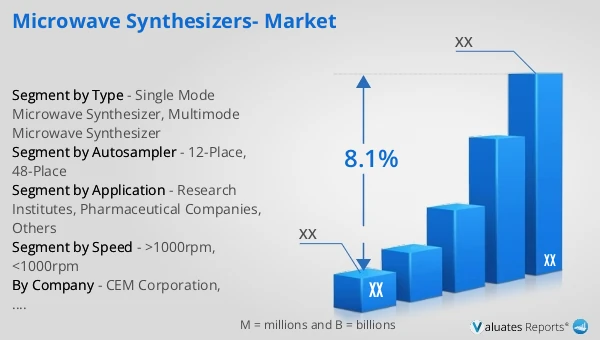
The global market for Microwave Synthesizers was estimated to be worth US$ 161 million in 2025 and is projected to reach US$ 278 million, growing at a CAGR of 8.1% from 2026 to 2032.

Microwave Synthesizers- Market

Microwave Synthesizers- Market

The potential shifts in the 2025 U.S. tariff framework pose substantial volatility risks to global markets. This report provides a comprehensive assessment of recent tariff adjustments and international strategic countermeasures on Microwave Synthesizers cross-border industrial footprints, capital allocation patterns, regional economic interdependencies, and supply chain reconfigurations.
Microwave synthesizers serve as typical "reaction efficiency amplifiers" in drug synthesis, materials chemistry, and fine chemical research and development. Their core value lies in addressing the long-standing pain points of traditional oil baths/heating mantles regarding heating rate, heat transfer uniformity, scale-up repeatability, and safety boundaries. In scenarios such as drug intermediates, peptide/glycochemistry, coordination, and nanomaterial synthesis, traditional external heating is often limited by "wall heat transfer + thermal inertia," resulting in slow heating, large overshoot, and difficulty in controlling system hotspots, leading to long reaction times and unstable selectivity and batch-to-batch consistency. Microwave synthesizers, by using bulk dielectric heating of polar solvents/reactants, achieve second- to minute-level heating and precise temperature-pressure closed-loop control within a sealed, pressure-resistant reaction vessel. This transforms "heating" from an experience-based operation into a recordable and reproducible process parameter, significantly shortening reaction cycles, increasing screening throughput, and reducing side reactions and rework rates. This enables them to excel in "high-throughput exploration + rapid iteration +..." Microwave synthesizers have become one of the core desktop equipment used frequently in the "data traceability" R&D system. In 2025, the global sales volume of microwave synthesizers in various application scenarios was approximately 12,200 units, with an average price of USD 13,200 per unit and a gross profit margin of approximately 36%. A microwave synthesizer is an experimental device that uses microwave energy to heat a chemical reaction system to accelerate the chemical synthesis process. Compared with traditional heating methods (such as oil baths, hot plates, etc.), microwave heating has the characteristics of being fast, efficient, uniform, and highly selective, which can significantly shorten the reaction time, increase the yield, and reduce the occurrence of side reactions. Typical product structures include: microwave source (magnetron or solid-state microwave source) and waveguide/resonant cavity, single-mode/multi-mode cavity, pressure-resistant reaction vessel (glass/quartz/SiC or PTFE/PFA lined metal vessel), temperature measurement (IR + fiber optic probe/contact type), pressure sensing and pressure relief safety chain, stirring/rotary or reaction position switching mechanism, cooling module, control and recording system (method library/audit trail/data export), etc. Common parameters are typically: microwave power 300–2,000 W (mainly benchtop R&D), temperature control range room temperature to 300 ℃ (commonly 40–250 ℃), pressure resistance 20–40 bar (common in closed R&D systems), reaction volume 0.2–50 mL or 50–1,000 mL, temperature control accuracy typically ±1–±3 ℃, and supports multi-stage programmed temperature ramping and hold-up, pressure limit interlocking, and automatic shutdown. Typical usage: a medicinal chemistry/organic synthesis team of 6–12 people usually uses one single-mode microwave synthesizer (with multiple reaction positions/flasks); a medium-sized pharmaceutical company/materials R&D center typically uses 2–6 units (configured according to project and platform sharing); CROs/process platforms with high-throughput synthesis service capabilities often use 4–10 units (including automated samplers/multi-position turntables); multi-mode systems for scale-up and batch material preparation are typically configured with 1–3 units per laboratory or pilot line.
Supply Situation
Upstream raw materials and key components mainly include 304/316L stainless steel and aluminum alloy for pressure-resistant chambers and structural parts; microwave sources and power devices (magnetrons/solid-state power amplifier modules); waveguides and chamber shielding components; chemical-resistant linings such as PTFE/PFA and sealing rings; infrared temperature measurement and fiber optic temperature probes; pressure sensors and safety valves; cooling and air duct/liquid cooling components; and control systems (PLC/MCU, touch screen, data storage and interfaces). The combined cost of raw materials and electromechanical assembly typically accounts for the bulk of the total cost, and temperature/pressure measurement and safety chain design directly determine whether the equipment can stably operate under high pressure and high temperature and pass laboratory audits. Typical upstream suppliers include Outokumpu, The Chemours Company, Panasonic, Infineon, and Siemens.
Manufacturer Characteristics
CEM has a broad user base for benchtop single-mode systems in medicinal chemistry and organic synthesis; Anton Paar has high penetration rates in scenarios requiring traceable temperature and pressure control and standardized methodologies, with its Monowave and other single-mode routes; Biotage has strong coverage among laboratory platform customers integrating with synthetic workflows (purification/preparation); Milestone has a strong reputation for engineering expertise in multimode, materials/scale-up applications, and safety design.
Example
Ohio University purchased one Anton Paar Monowave 450 (Monomode Microwave Reactor), along with a MAS 24 Autosampler and camera. This purchase order directly included key configurations in the technical and commercial requirements (single-mode microwave reactor + automated sampler/multi-site reaction + process visualization), reflecting the typical needs of universities/platform-type laboratories for "throughput + standardization + auditability."
Applications
Microwave synthesizers are widely used in drug discovery and process route exploration (heterocyclic construction, coupling, substitution, reduction/oxidation, etc.), materials chemistry (nanomaterials/catalysts/MOFs/polymerization and functional coating precursors), fragrance and flavor and fine chemical pilot-scale testing, agrochemical intermediate screening, and synthetic methodology platforms in universities and research institutes, among other applications. Typical downstream customers include platform-based R&D organizations and companies driven by "high-throughput R&D + reproducible data," such as Pfizer, Novartis, Merck, BASF, and WuXi AppTec.
Product Advantages
For downstream users (pharmaceutical R&D, CRO/CDMO, materials laboratories, and university platforms), the core advantage of microwave synthesizers is not simply "raising the temperature," but rather reducing the three most expensive aspects of R&D—time, failure, and non-reproducibility—all at once: Microwave bulk heating provides minute-level temperature increases and precise closed-loop temperature and pressure control, compressing many traditionally hour-long reaction screenings into shorter cycles, directly accelerating project iterations; airtight pressure resistance and procedural methods transform "differences in operating techniques" into replicable parameter windows, resulting in higher batch-to-batch consistency and fewer rejected reactions and rework; Simultaneously, multi-site reaction/automatic sample introduction frees up personnel from repetitive tasks, allowing the same team to perform more route and condition combinations without significantly increasing manpower. Ultimately, this translates "increased R&D throughput + data traceability + clearer safety boundaries" into faster milestone deliveries and lower unit sample development costs, thereby gaining higher bargaining power and resource priority in external service pricing or internal R&D budget competition.
Technology Trends
Technological evolution is focused on four directions: First, the shift from batch processing to continuous flow and scalable approaches, focusing on continuous microwave reactions, online temperature and pressure control, and residence time distribution optimization to support process scale-up and continuous manufacturing; Second, the evolution from magnetrons to solid-state microwave sources and finer power modulation to achieve more stable energy output and more predictable amplification linearity; Third, accelerated high throughput and automation, with more reaction sites, more comprehensive automated loading/unloading/barcode traceability/method libraries and audit trails, making microwave synthesizers more like "auditable synthesis workstations"; Fourth, upgrades in safety and material compatibility, optimizing seals, linings, and sensor redundancy for corrosive systems, high-solids-content slurries, and higher pressure and temperature windows to improve availability and reduce platform maintenance risks.
Market Influencing Factors
The growth of the microwave synthesizer market is largely driven by "a shift in R&D paradigms + compliance and efficiency requirements": On the one hand, drug development, materials development, and fine chemical pilot-scale trials increasingly rely on high-throughput, reproducible, and traceable data assets. Microwave synthesizers compress large-scale reactions from "hours of manual trial and error" to "minutes of programmed screening," naturally aligning with platform-based R&D. On the other hand, green chemistry and energy efficiency constraints are driving the adoption of routes with shorter reaction times and fewer solvents/byproducts, leading to a continuous expansion of microwave-assisted synthesis adoption. In terms of the competitive landscape, leading brands extend their one-time equipment sales into platform ecosystem lock-in through "equipment + methodology + consumables/reaction flasks + software auditing," while mid-to-low-end suppliers compete more on price range and basic functionality. Cost constraints stem from key components (microwave sources/power devices, sensors, safety chains, chemical-resistant materials) and assembly consistency; delivery and after-sales capabilities significantly impact customer repurchase rates and platform inclusion probability.
This report provides a comprehensive view of the global market for Microwave Synthesizers, covering total sales volume, sales revenue, pricing, the market share and ranking of key companies, along with analyses by region & country, by Type, and by Application.
The Microwave Synthesizers market size, estimations, and forecasts are presented in terms of sales volume (Units) and revenue ($ millions), with 2025 as the base year and historical and forecast data from 2021 to 2032. The report combines quantitative and qualitative analysis to help readers develop growth strategies, assess the competitive landscape, evaluate their position in the current marketplace, and make informed business decisions regarding Microwave Synthesizers.
Market Segmentation

Scope of Microwave Synthesizers- Market Report

Report Metric Details
Report Name Microwave Synthesizers- Market
CAGR 8.1%
Segment by Type
  • Single Mode Microwave Synthesizer
  • Multimode Microwave Synthesizer
Segment by Speed
  • >1000rpm
  • <1000rpm
Segment by Autosampler
  • 12-Place
  • 48-Place
Segment by Application
  • Research Institutes
  • Pharmaceutical Companies
  • Others
By Region
  • North America (United States, Canada)
  • Europe (Germany, France, UK, Italy, Russia) Rest of Europe
  • Nordic Countries
  • Asia-Pacific (China, Japan, South Korea)
  • Southeast Asia (India, Australia)
  • Rest of Asia
  • Latin America (Mexico, Brazil)
  • Rest of Latin America
  • Middle East & Africa (Turkey, Saudi Arabia, UAE, Rest of MEA)
Consumption by Region
  • North America (United States, Canada)
  • Europe (Germany, France, UK, Italy, Russia)
  • Asia-Pacific (China, Japan, South Korea, Taiwan)
  • Southeast Asia (India)
  • Latin America (Mexico, Brazil)
By Company CEM Corporation, Anton Paar, Biotage, Milestone, EYELA, Hanon Group, SAIDA, PreeKem, BIOBASE, Labotronics Scientific
Forecast units USD million in value
Report coverage Revenue and volume forecast, company share, competitive landscape, growth factors and trends

Chapter Outline

  • Chapter 1: Introduces the scope of the report and the global market size (value, volume, and price). It also summarizes market dynamics and Recent Developments; identifies key drivers and restraints; outlines challenges and risks for manufacturers; reviews relevant industry policies and U.S. tariff implications.
  • Chapter 2: Provides a detailed analysis of the Microwave Synthesizers manufacturers' competitive landscape—including pricing, sales and revenue shares, Recent Developments plans, and mergers and acquisitions (M&A).
  • Chapter 3: Analyzes market segmentation by Type, presenting the size and growth potential of each segment to help readers identify blue-ocean opportunities.
  • Chapter 4: Analyzes market segmentation by Application, presenting the size and growth potential of each downstream segment to help readers identify blue-ocean opportunities.
  • Chapter 5: Presents Microwave Synthesizers sales and revenue at the regional level. It offers a quantitative assessment of market size and growth potential by region and summarizes market development, future prospects, addressable space, and country-level market size worldwide.
  • Chapter 6: Presents Microwave Synthesizers sales and revenue at the country level. It provides segmented data by Type and by Application for each country/region.
  • Chapter 7: Profiles key players, detailing the main companies' product sales, revenue, pricing, gross margin, product portfolios, Recent Developments, etc.
  • Chapter 8: Analyzes the industry value chain, including upstream suppliers and downstream applications/customers.
  • Chapter 9: Conclusion.

FAQ for this report

Who are the main players in the Microwave Synthesizers- Market report?

Ans: The main players in the Microwave Synthesizers- Market are CEM Corporation, Anton Paar, Biotage, Milestone, EYELA, Hanon Group, SAIDA, PreeKem, BIOBASE, Labotronics Scientific

What are the Application segmentation covered in the Microwave Synthesizers- Market report?

Ans: The Applications covered in the Microwave Synthesizers- Market report are Research Institutes, Pharmaceutical Companies, Others

What are the Type segmentation covered in the Microwave Synthesizers- Market report?

Ans: The Types covered in the Microwave Synthesizers- Market report are Single Mode Microwave Synthesizer, Multimode Microwave Synthesizer

1 Market Overview
1.1 Microwave Synthesizers Product Introduction
1.2 Global Microwave Synthesizers Market Size Forecast
1.2.1 Global Microwave Synthesizers Sales Value (2021–2032)
1.2.2 Global Microwave Synthesizers Sales Volume (2021–2032)
1.2.3 Global Microwave Synthesizers Sales Price (2021–2032)
1.3 Microwave Synthesizers Market Trends & Drivers
1.3.1 Microwave Synthesizers Industry Trends
1.3.2 Microwave Synthesizers Market Drivers & Opportunities
1.3.3 Microwave Synthesizers Market Challenges
1.3.4 Microwave Synthesizers Market Restraints
1.3.5 Impact of U.S. Tariffs
1.4 Assumptions and Limitations
1.5 Study Objectives
1.6 Years Considered
2 Competitive Analysis by Company
2.1 Global Microwave Synthesizers Players Revenue Ranking (2025)
2.2 Global Microwave Synthesizers Revenue by Company (2021–2026)
2.3 Global Microwave Synthesizers Sales Volume Ranking of Players (2025)
2.4 Global Microwave Synthesizers Sales Volume by Company (2021–2026)
2.5 Global Microwave Synthesizers Average Price by Company (2021–2026)
2.6 Key Manufacturers Microwave Synthesizers Manufacturing Base and Headquarters
2.7 Key Manufacturers Microwave Synthesizers Product Offerings
2.8 Key Manufacturers Start of Mass Production of Microwave Synthesizers
2.9 Microwave Synthesizers Market Competitive Analysis
2.9.1 Microwave Synthesizers Market Concentration Rate (2021–2026)
2.9.2 Global 5 and 10 Largest Manufacturers by Microwave Synthesizers Revenue in 2025
2.9.3 Global Companies by Tier (Tier 1, Tier 2, Tier 3), based on Microwave Synthesizers revenue, 2025
2.10 Mergers & Acquisitions and Expansion
3 Segmentation Microwave Synthesizers Market Classification
3.1 Introduction by Type
3.1.1 Single Mode Microwave Synthesizer
3.1.2 Multimode Microwave Synthesizer
3.1.3 Global Microwave Synthesizers Sales Value by Type
3.1.3.1 Global Microwave Synthesizers Sales Value by Type (2021 vs 2025 vs 2032)
3.1.3.2 Global Microwave Synthesizers Sales Value, by Type (2021–2032)
3.1.3.3 Global Microwave Synthesizers Sales Value, by Type (%), 2021–2032
3.1.4 Global Microwave Synthesizers Sales Volume by Type
3.1.4.1 Global Microwave Synthesizers Sales Volume by Type (2021 vs 2025 vs 2032)
3.1.4.2 Global Microwave Synthesizers Sales Volume, by Type (2021–2032)
3.1.4.3 Global Microwave Synthesizers Sales Volume, by Type (%), 2021–2032
3.1.5 Global Microwave Synthesizers Average Price by Type (2021–2032)
3.2 Introduction by Speed
3.2.1 >1000rpm
3.2.2 <1000rpm
3.2.3 Global Microwave Synthesizers Sales Value by Speed
3.2.3.1 Global Microwave Synthesizers Sales Value by Speed (2021 vs 2025 vs 2032)
3.2.3.2 Global Microwave Synthesizers Sales Value, by Speed (2021–2032)
3.2.3.3 Global Microwave Synthesizers Sales Value, by Speed (%), 2021–2032
3.2.4 Global Microwave Synthesizers Sales Volume by Speed
3.2.4.1 Global Microwave Synthesizers Sales Volume by Speed (2021 vs 2025 vs 2032)
3.2.4.2 Global Microwave Synthesizers Sales Volume, by Speed (2021–2032)
3.2.4.3 Global Microwave Synthesizers Sales Volume, by Speed (%), 2021–2032
3.2.5 Global Microwave Synthesizers Average Price by Speed (2021–2032)
3.3 Introduction by Autosampler
3.3.1 12-Place
3.3.2 48-Place
3.3.3 Global Microwave Synthesizers Sales Value by Autosampler
3.3.3.1 Global Microwave Synthesizers Sales Value by Autosampler (2021 vs 2025 vs 2032)
3.3.3.2 Global Microwave Synthesizers Sales Value, by Autosampler (2021–2032)
3.3.3.3 Global Microwave Synthesizers Sales Value, by Autosampler (%), 2021–2032
3.3.4 Global Microwave Synthesizers Sales Volume by Autosampler
3.3.4.1 Global Microwave Synthesizers Sales Volume by Autosampler (2021 vs 2025 vs 2032)
3.3.4.2 Global Microwave Synthesizers Sales Volume, by Autosampler (2021–2032)
3.3.4.3 Global Microwave Synthesizers Sales Volume, by Autosampler (%), 2021–2032
3.3.5 Global Microwave Synthesizers Average Price by Autosampler (2021–2032)
4 Segmentation by Application
4.1 Introduction by Application
4.1.1 Research Institutes
4.1.2 Pharmaceutical Companies
4.1.3 Others
4.2 Global Microwave Synthesizers Sales Value by Application
4.2.1 Global Microwave Synthesizers Sales Value by Application (2021 vs 2025 vs 2032)
4.2.2 Global Microwave Synthesizers Sales Value, by Application (2021–2032)
4.2.3 Global Microwave Synthesizers Sales Value, by Application (%), 2021–2032
4.3 Global Microwave Synthesizers Sales Volume by Application
4.3.1 Global Microwave Synthesizers Sales Volume by Application (2021 vs 2025 vs 2032)
4.3.2 Global Microwave Synthesizers Sales Volume, by Application (2021–2032)
4.3.3 Global Microwave Synthesizers Sales Volume, by Application (%), 2021–2032
4.4 Global Microwave Synthesizers Average Price by Application (2021–2032)
5 Segmentation by Region
5.1 Global Microwave Synthesizers Sales Value by Region
5.1.1 Global Microwave Synthesizers Sales Value by Region: 2021 vs 2025 vs 2032
5.1.2 Global Microwave Synthesizers Sales Value by Region (2021–2026)
5.1.3 Global Microwave Synthesizers Sales Value by Region (2027–2032)
5.1.4 Global Microwave Synthesizers Sales Value by Region (%), 2021–2032
5.2 Global Microwave Synthesizers Sales Volume by Region
5.2.1 Global Microwave Synthesizers Sales Volume by Region: 2021 vs 2025 vs 2032
5.2.2 Global Microwave Synthesizers Sales Volume by Region (2021–2026)
5.2.3 Global Microwave Synthesizers Sales Volume by Region (2027–2032)
5.2.4 Global Microwave Synthesizers Sales Volume by Region (%), 2021–2032
5.3 Global Microwave Synthesizers Average Price by Region (2021–2032)
5.4 North America
5.4.1 North America Microwave Synthesizers Sales Value, 2021–2032
5.4.2 North America Microwave Synthesizers Sales Value by Country (%), 2025 vs 2032
5.5 Europe
5.5.1 Europe Microwave Synthesizers Sales Value, 2021–2032
5.5.2 Europe Microwave Synthesizers Sales Value by Country (%), 2025 vs 2032
5.6 Asia Pacific
5.6.1 Asia Pacific Microwave Synthesizers Sales Value, 2021–2032
5.6.2 Asia Pacific Microwave Synthesizers Sales Value by Region (%), 2025 vs 2032
5.7 South America
5.7.1 South America Microwave Synthesizers Sales Value, 2021–2032
5.7.2 South America Microwave Synthesizers Sales Value by Country (%), 2025 vs 2032
5.8 Middle East & Africa
5.8.1 Middle East & Africa Microwave Synthesizers Sales Value, 2021–2032
5.8.2 Middle East & Africa Microwave Synthesizers Sales Value by Country (%), 2025 vs 2032
6 Segmentation by Key Countries/Regions
6.1 Key Countries/Regions Microwave Synthesizers Sales Value Growth Trends, 2021 vs 2025 vs 2032
6.2 Key Countries/Regions Microwave Synthesizers Sales Value and Sales Volume
6.2.1 Key Countries/Regions Microwave Synthesizers Sales Value, 2021–2032
6.2.2 Key Countries/Regions Microwave Synthesizers Sales Volume, 2021–2032
6.3 United States
6.3.1 United States Microwave Synthesizers Sales Value, 2021–2032
6.3.2 United States Microwave Synthesizers Sales Value by Type (%), 2025 vs 2032
6.3.3 United States Microwave Synthesizers Sales Value by Application, 2025 vs 2032
6.4 Europe
6.4.1 Europe Microwave Synthesizers Sales Value, 2021–2032
6.4.2 Europe Microwave Synthesizers Sales Value by Type (%), 2025 vs 2032
6.4.3 Europe Microwave Synthesizers Sales Value by Application, 2025 vs 2032
6.5 China
6.5.1 China Microwave Synthesizers Sales Value, 2021–2032
6.5.2 China Microwave Synthesizers Sales Value by Type (%), 2025 vs 2032
6.5.3 China Microwave Synthesizers Sales Value by Application, 2025 vs 2032
6.6 Japan
6.6.1 Japan Microwave Synthesizers Sales Value, 2021–2032
6.6.2 Japan Microwave Synthesizers Sales Value by Type (%), 2025 vs 2032
6.6.3 Japan Microwave Synthesizers Sales Value by Application, 2025 vs 2032
6.7 South Korea
6.7.1 South Korea Microwave Synthesizers Sales Value, 2021–2032
6.7.2 South Korea Microwave Synthesizers Sales Value by Type (%), 2025 vs 2032
6.7.3 South Korea Microwave Synthesizers Sales Value by Application, 2025 vs 2032
6.8 Southeast Asia
6.8.1 Southeast Asia Microwave Synthesizers Sales Value, 2021–2032
6.8.2 Southeast Asia Microwave Synthesizers Sales Value by Type (%), 2025 vs 2032
6.8.3 Southeast Asia Microwave Synthesizers Sales Value by Application, 2025 vs 2032
6.9 India
6.9.1 India Microwave Synthesizers Sales Value, 2021–2032
6.9.2 India Microwave Synthesizers Sales Value by Type (%), 2025 vs 2032
6.9.3 India Microwave Synthesizers Sales Value by Application, 2025 vs 2032
7 Company Profiles
7.1 CEM Corporation
7.1.1 CEM Corporation Company Information
7.1.2 CEM Corporation Introduction and Business Overview
7.1.3 CEM Corporation Microwave Synthesizers Sales, Revenue, Price and Gross Margin (2021–2026)
7.1.4 CEM Corporation Microwave Synthesizers Product Offerings
7.1.5 CEM Corporation Recent Developments
7.2 Anton Paar
7.2.1 Anton Paar Company Information
7.2.2 Anton Paar Introduction and Business Overview
7.2.3 Anton Paar Microwave Synthesizers Sales, Revenue, Price and Gross Margin (2021–2026)
7.2.4 Anton Paar Microwave Synthesizers Product Offerings
7.2.5 Anton Paar Recent Developments
7.3 Biotage
7.3.1 Biotage Company Information
7.3.2 Biotage Introduction and Business Overview
7.3.3 Biotage Microwave Synthesizers Sales, Revenue, Price and Gross Margin (2021–2026)
7.3.4 Biotage Microwave Synthesizers Product Offerings
7.3.5 Biotage Recent Developments
7.4 Milestone
7.4.1 Milestone Company Information
7.4.2 Milestone Introduction and Business Overview
7.4.3 Milestone Microwave Synthesizers Sales, Revenue, Price and Gross Margin (2021–2026)
7.4.4 Milestone Microwave Synthesizers Product Offerings
7.4.5 Milestone Recent Developments
7.5 EYELA
7.5.1 EYELA Company Information
7.5.2 EYELA Introduction and Business Overview
7.5.3 EYELA Microwave Synthesizers Sales, Revenue, Price and Gross Margin (2021–2026)
7.5.4 EYELA Microwave Synthesizers Product Offerings
7.5.5 EYELA Recent Developments
7.6 Hanon Group
7.6.1 Hanon Group Company Information
7.6.2 Hanon Group Introduction and Business Overview
7.6.3 Hanon Group Microwave Synthesizers Sales, Revenue, Price and Gross Margin (2021–2026)
7.6.4 Hanon Group Microwave Synthesizers Product Offerings
7.6.5 Hanon Group Recent Developments
7.7 SAIDA
7.7.1 SAIDA Company Information
7.7.2 SAIDA Introduction and Business Overview
7.7.3 SAIDA Microwave Synthesizers Sales, Revenue, Price and Gross Margin (2021–2026)
7.7.4 SAIDA Microwave Synthesizers Product Offerings
7.7.5 SAIDA Recent Developments
7.8 PreeKem
7.8.1 PreeKem Company Information
7.8.2 PreeKem Introduction and Business Overview
7.8.3 PreeKem Microwave Synthesizers Sales, Revenue, Price and Gross Margin (2021–2026)
7.8.4 PreeKem Microwave Synthesizers Product Offerings
7.8.5 PreeKem Recent Developments
7.9 BIOBASE
7.9.1 BIOBASE Company Information
7.9.2 BIOBASE Introduction and Business Overview
7.9.3 BIOBASE Microwave Synthesizers Sales, Revenue, Price and Gross Margin (2021–2026)
7.9.4 BIOBASE Microwave Synthesizers Product Offerings
7.9.5 BIOBASE Recent Developments
7.10 Labotronics Scientific
7.10.1 Labotronics Scientific Company Information
7.10.2 Labotronics Scientific Introduction and Business Overview
7.10.3 Labotronics Scientific Microwave Synthesizers Sales, Revenue, Price and Gross Margin (2021–2026)
7.10.4 Labotronics Scientific Microwave Synthesizers Product Offerings
7.10.5 Labotronics Scientific Recent Developments
8 Industry Chain Analysis
8.1 Microwave Synthesizers Industrial Chain
8.2 Microwave Synthesizers Upstream Analysis
8.2.1 Key Raw Materials
8.2.2 Key Suppliers of Raw Materials
8.2.3 Manufacturing Cost Structure
8.3 Midstream Analysis
8.4 Downstream Analysis (Customer Analysis)
8.5 Sales Model and Sales Channelss
8.5.1 Microwave Synthesizers Sales Model
8.5.2 Sales Channels
8.5.3 Microwave Synthesizers Distributors
9 Research Findings and Conclusion
10 Appendix
10.1 Research Methodology
10.1.1 Methodology/Research Approach
10.1.1.1 Research Programs/Design
10.1.1.2 Market Size Estimation
10.1.1.3 Market Breakdown and Data Triangulation
10.1.2 Data Source
10.1.2.1 Secondary Sources
10.1.2.2 Primary Sources
10.2 Author Details
10.3 Disclaimer

List of Tables
 Table 1. Microwave Synthesizers Market Trends
 Table 2. Microwave Synthesizers Market Drivers & Opportunities
 Table 3. Microwave Synthesizers Market Challenges
 Table 4. Microwave Synthesizers Market Restraints


List of Figures
 Figure 1. Microwave Synthesizers Product Picture
 Figure 2. Global Microwave Synthesizers Sales Value, 2021 vs 2025 vs 2032 (US$ Million)
 Figure 3. Global Microwave Synthesizers Sales Value (US$ Million), 2021–2032
 Figure 4. Global Microwave Synthesizers Sales Volume (Units), 2021–2032
 Figure 5. Global Microwave Synthesizers Sales Price (K US$/Unit), 2021–2032
 Figure 6. Microwave Synthesizers Report Years Considered
 Figure 7. Global Microwave Synthesizers Players Revenue Ranking (US$ Million), 2025
 Figure 8. Global Microwave Synthesizers Sales Volume Ranking of Players (Units), 2025
 Figure 9. The 5 and 10 Largest Manufacturers in the World: Market Share by Microwave Synthesizers Revenue in 2025
 Figure 10. Microwave Synthesizers Market Share by Company Type (Tier 1, Tier 2, and Tier 3): 2021 vs 2025
 Figure 11. Single Mode Microwave Synthesizer Picture
 Figure 12. Multimode Microwave Synthesizer Picture
 Figure 13. Global Microwave Synthesizers Sales Value by Type (US$ Million), 2021 vs 2025 vs 2032
 Figure 14. Global Microwave Synthesizers Sales Value Market Share by Type, 2025 & 2032
 Figure 15. Global Microwave Synthesizers Sales Volume by Type (Units), 2021 vs 2025 vs 2032
 Figure 16. Global Microwave Synthesizers Sales Volume Market Share by Type, 2025 & 2032
 Figure 17. Global Microwave Synthesizers Price by Type (K US$/Unit), 2021–2032
 Figure 18. >1000rpm Picture
 Figure 19. <1000rpm Picture
 Figure 20. Global Microwave Synthesizers Sales Value by Speed (US$ Million), 2021 vs 2025 vs 2032
 Figure 21. Global Microwave Synthesizers Sales Value Market Share by Speed, 2025 & 2032
 Figure 22. Global Microwave Synthesizers Sales Volume by Speed (Units), 2021 vs 2025 vs 2032
 Figure 23. Global Microwave Synthesizers Sales Volume Market Share by Speed, 2025 & 2032
 Figure 24. Global Microwave Synthesizers Price by Speed (K US$/Unit), 2021–2032
 Figure 25. 12-Place Picture
 Figure 26. 48-Place Picture
 Figure 27. Global Microwave Synthesizers Sales Value by Autosampler (US$ Million), 2021 vs 2025 vs 2032
 Figure 28. Global Microwave Synthesizers Sales Value Market Share by Autosampler, 2025 & 2032
 Figure 29. Global Microwave Synthesizers Sales Volume by Autosampler (Units), 2021 vs 2025 vs 2032
 Figure 30. Global Microwave Synthesizers Sales Volume Market Share by Autosampler, 2025 & 2032
 Figure 31. Global Microwave Synthesizers Price by Autosampler (K US$/Unit), 2021–2032
 Figure 32. Product Picture of Research Institutes
 Figure 33. Product Picture of Pharmaceutical Companies
 Figure 34. Product Picture of Others
 Figure 35. Global Microwave Synthesizers Sales Value by Application (US$ Million), 2021 vs 2025 vs 2032
 Figure 36. Global Microwave Synthesizers Sales Value Market Share by Application, 2025 & 2032
 Figure 37. Global Microwave Synthesizers Sales Volume by Application (Units), 2021 vs 2025 vs 2032
 Figure 38. Global Microwave Synthesizers Sales Volume Market Share by Application, 2025 & 2032
 Figure 39. Global Microwave Synthesizers Price by Application (K US$/Unit), 2021–2032
 Figure 40. North America Microwave Synthesizers Sales Value (US$ Million), 2021–2032
 Figure 41. North America Microwave Synthesizers Sales Value by Country (%), 2025 vs 2032
 Figure 42. Europe Microwave Synthesizers Sales Value (US$ Million), 2021–2032
 Figure 43. Europe Microwave Synthesizers Sales Value by Country (%), 2025 vs 2032
 Figure 44. Asia Pacific Microwave Synthesizers Sales Value (US$ Million), 2021–2032
 Figure 45. Asia Pacific Microwave Synthesizers Sales Value by Region (%), 2025 vs 2032
 Figure 46. South America Microwave Synthesizers Sales Value (US$ Million), 2021–2032
 Figure 47. South America Microwave Synthesizers Sales Value by Country (%), 2025 vs 2032
 Figure 48. Middle East & Africa Microwave Synthesizers Sales Value (US$ Million), 2021–2032
 Figure 49. Middle East & Africa Microwave Synthesizers Sales Value by Country (%), 2025 vs 2032
 Figure 50. Key Countries/Regions Microwave Synthesizers Sales Value (%), 2021–2032
 Figure 51. Key Countries/Regions Microwave Synthesizers Sales Volume (%), 2021–2032
 Figure 52. United States Microwave Synthesizers Sales Value (US$ Million), 2021–2032
 Figure 53. United States Microwave Synthesizers Sales Value by Type (%), 2025 vs 2032
 Figure 54. United States Microwave Synthesizers Sales Value by Application (%), 2025 vs 2032
 Figure 55. Europe Microwave Synthesizers Sales Value (US$ Million), 2021–2032
 Figure 56. Europe Microwave Synthesizers Sales Value by Type (%), 2025 vs 2032
 Figure 57. Europe Microwave Synthesizers Sales Value by Application (%), 2025 vs 2032
 Figure 58. China Microwave Synthesizers Sales Value (US$ Million), 2021–2032
 Figure 59. China Microwave Synthesizers Sales Value by Type (%), 2025 vs 2032
 Figure 60. China Microwave Synthesizers Sales Value by Application (%), 2025 vs 2032
 Figure 61. Japan Microwave Synthesizers Sales Value (US$ Million), 2021–2032
 Figure 62. Japan Microwave Synthesizers Sales Value by Type (%), 2025 vs 2032
 Figure 63. Japan Microwave Synthesizers Sales Value by Application (%), 2025 vs 2032
 Figure 64. South Korea Microwave Synthesizers Sales Value (US$ Million), 2021–2032
 Figure 65. South Korea Microwave Synthesizers Sales Value by Type (%), 2025 vs 2032
 Figure 66. South Korea Microwave Synthesizers Sales Value by Application (%), 2025 vs 2032
 Figure 67. Southeast Asia Microwave Synthesizers Sales Value (US$ Million), 2021–2032
 Figure 68. Southeast Asia Microwave Synthesizers Sales Value by Type (%), 2025 vs 2032
 Figure 69. Southeast Asia Microwave Synthesizers Sales Value by Application (%), 2025 vs 2032
 Figure 70. India Microwave Synthesizers Sales Value (US$ Million), 2021–2032
 Figure 71. India Microwave Synthesizers Sales Value by Type (%), 2025 vs 2032
 Figure 72. India Microwave Synthesizers Sales Value by Application (%), 2025 vs 2032
 Figure 73. Microwave Synthesizers Industrial Chain
 Figure 74. Microwave Synthesizers Manufacturing Cost Structure
 Figure 75. Channels of Distribution (Direct Sales, and Distribution)
 Figure 76. Bottom-up and Top-down Approaches for This Report
 Figure 77. Data Triangulation
 Figure 78. Key Executives Interviewed
SELECT A FORMAT
Added to Cart
Electronic

$3950

Single User License
Electronic

$5925

Multi User License
Electronic

$7900

Enterprise License
Add to Cart
Buy Now (15% Discount)

OUR CUSTOMER

Nano Dimension