0
U.S. (TOLL FREE)
+1 (315) 215-3225
Automative

0
U.S. (TOLL FREE)
+1 (315) 215-3225
High Modulus Para-Aramid- Global Market Share and Ranking, Overall Sales and Demand Forecast 2026-2032
Published Date: 2026-01-13
|
Report Code: QYRE-Auto-18P14383
Home | Market Reports
Global High Modulus Para Aramid Market Research Report 2023
BUY CHAPTERS

High Modulus Para-Aramid- Global Market Share and Ranking, Overall Sales and Demand Forecast 2026-2032

Code: QYRE-Auto-18P14383
Report
2026-01-13
Pages:85
QYResearch
Buy Now with 15% Discount
DESCRIPTION
TABLE OF CONTENT
TABLES & FIGURES

High Modulus Para-Aramid- Market Size

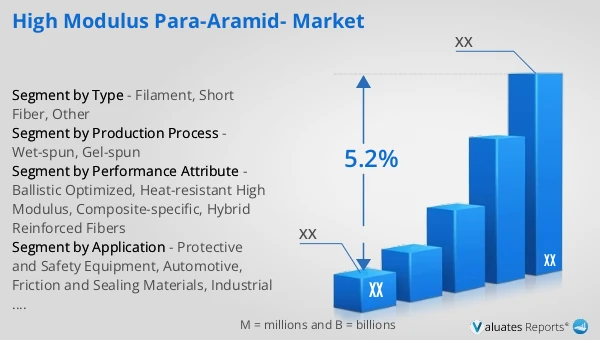
The global market for High Modulus Para-Aramid was estimated to be worth US$ 1125 million in 2025 and is projected to reach US$ 1601 million, growing at a CAGR of 5.2% from 2026 to 2032.

High Modulus Para-Aramid- Market

High Modulus Para-Aramid- Market

The potential shifts in the 2025 U.S. tariff framework pose substantial volatility risks to global markets. This report provides a comprehensive assessment of recent tariff adjustments and international strategic countermeasures on High Modulus Para-Aramid cross-border industrial footprints, capital allocation patterns, regional economic interdependencies, and supply chain reconfigurations.
High Modulus Para-Aramid refers to a class of synthetic aromatic polyamide fibers characterized by exceptionally high tensile strength and modulus (stiffness), excellent heat resistance, light weight, and superior dimensional stability, used especially where high strength-to-weight ratios and durability are critical, e.g., aerospace, defense, ballistic protection, and high-performance composites.
The high modulus para-aramid industry chain begins upstream with petrochemical feedstocks such as p-phenylenediamine (PPD) and terephthaloyl chloride (TDC) and specialty solvents like sulfuric acid for polymer synthesis, advancing to midstream polymerization and high-precision fiber spinning (wet or gel) into high modulus para-aramid filaments, to downstream weaving, composite pre-preg creation, finishing (coating or sizing), integration into ballistic, aerospace, automotive, and industrial products, distribution through specialized material and composite suppliers, value-added fabricators and OEM component producers, and final deployment by defense, aerospace, automotive, construction, and sports goods manufacturers.
Across global markets, ongoing and planned projects include high modulus para-aramid capacity expansions in Asia Pacific to meet growing defense and automotive demand, European facility upgrades integrating automation and digital process controls for improved composite integration, new joint ventures between major chemical and composite OEMs to build pre-preg and hybrid composite lines, US expansions targeting lightweight aerospace components and ballistic solutions, Southeast Asia greenfield plants to reduce logistic lead times, research partnerships focusing on recyclable and lower environmental impact production, automated spinning and finishing lines to cut cost and defect levels, and regional strategic hubs for composite fabrication and end-use manufacturing.
2025 Global Market sales Volume: 45,000 tons. Average Global Market Price: US$ 25,000 per ton. Market Average Gross Profit Margin: 28%.
The High Modulus Para-Aramid market sits within the broader high performance fiber industry and is shaped by the demand for lightweight high-strength materials in defense, aerospace, automotive, and industrial applications. Para-aramid fibers have exceptional strength, heat resistance and modulus, making them indispensable in ballistic protection, structural composites, and reinforcements.
Regional demand patterns see Asia Pacific expanding rapidly due to defense modernization and automotive growth, while Europe and North America sustain robust demand thanks to aerospace, advanced manufacturing, and stringent safety regulations. Robust growth drivers include increasing defense budgets, lightweighting trends in mobility, and infrastructure development requiring durable composites. However, supply chain constraints in feedstocks and high production complexity pose risks, as do competition from alternative high-performance fibers and fluctuating raw material costs. Technological trends emphasize digital manufacturing, automation, and hybrid composites to boost performance and lower costs. Manufacturers with integrated polymer production and composite fabrication have competitive advantage, and partnerships that reduce lead times and geographic supply imbalances are major strategic moves. Environmental and regulatory pressures are pushing for recyclable, lower-impact production.
With ongoing expansions and planned projects across regions, long-term growth prospects remain strong, although macroeconomic volatility and geopolitical tensions could introduce market disruption.
This report provides a comprehensive view of the global market for High Modulus Para-Aramid, covering total sales volume, sales revenue, pricing, the market share and ranking of key companies, along with analyses by region & country, by Type, and by Application.
The High Modulus Para-Aramid market size, estimations, and forecasts are presented in terms of sales volume (Tons) and revenue ($ millions), with 2025 as the base year and historical and forecast data from 2021 to 2032. The report combines quantitative and qualitative analysis to help readers develop growth strategies, assess the competitive landscape, evaluate their position in the current marketplace, and make informed business decisions regarding High Modulus Para-Aramid.
Market Segmentation

Scope of High Modulus Para-Aramid- Market Report

Report Metric Details
Report Name High Modulus Para-Aramid- Market
CAGR 5.2%
Segment by Type
  • Filament
  • Short Fiber
  • Other
Segment by Performance Attribute
  • Ballistic Optimized
  • Heat-resistant High Modulus
  • Composite-specific
  • Hybrid Reinforced Fibers
Segment by Production Process
  • Wet-spun
  • Gel-spun
Segment by Application
  • Protective and Safety Equipment
  • Automotive
  • Friction and Sealing Materials
  • Industrial Reinforcement
  • Others
By Region
  • North America (United States, Canada)
  • Europe (Germany, France, UK, Italy, Russia) Rest of Europe
  • Nordic Countries
  • Asia-Pacific (China, Japan, South Korea)
  • Southeast Asia (India, Australia)
  • Rest of Asia
  • Latin America (Mexico, Brazil)
  • Rest of Latin America
  • Middle East & Africa (Turkey, Saudi Arabia, UAE, Rest of MEA)
Consumption by Region
  • North America (United States, Canada)
  • Europe (Germany, France, UK, Italy, Russia)
  • Asia-Pacific (China, Japan, South Korea, Taiwan)
  • Southeast Asia (India)
  • Latin America (Mexico, Brazil)
By Company DuPont, Teijin, Kolon Industries, Hyosung, Tayho
Forecast units USD million in value
Report coverage Revenue and volume forecast, company share, competitive landscape, growth factors and trends

Chapter Outline

  • Chapter 1: Introduces the scope of the report and the global market size (value, volume, and price). It also summarizes market dynamics and Recent Developments; identifies key drivers and restraints; outlines challenges and risks for manufacturers; reviews relevant industry policies and U.S. tariff implications.
  • Chapter 2: Provides a detailed analysis of the High Modulus Para-Aramid manufacturers' competitive landscape—including pricing, sales and revenue shares, Recent Developments plans, and mergers and acquisitions (M&A).
  • Chapter 3: Analyzes market segmentation by Type, presenting the size and growth potential of each segment to help readers identify blue-ocean opportunities.
  • Chapter 4: Analyzes market segmentation by Application, presenting the size and growth potential of each downstream segment to help readers identify blue-ocean opportunities.
  • Chapter 5: Presents High Modulus Para-Aramid sales and revenue at the regional level. It offers a quantitative assessment of market size and growth potential by region and summarizes market development, future prospects, addressable space, and country-level market size worldwide.
  • Chapter 6: Presents High Modulus Para-Aramid sales and revenue at the country level. It provides segmented data by Type and by Application for each country/region.
  • Chapter 7: Profiles key players, detailing the main companies' product sales, revenue, pricing, gross margin, product portfolios, Recent Developments, etc.
  • Chapter 8: Analyzes the industry value chain, including upstream suppliers and downstream applications/customers.
  • Chapter 9: Conclusion.

FAQ for this report

Who are the main players in the High Modulus Para-Aramid- Market report?

Ans: The main players in the High Modulus Para-Aramid- Market are DuPont, Teijin, Kolon Industries, Hyosung, Tayho

What are the Application segmentation covered in the High Modulus Para-Aramid- Market report?

Ans: The Applications covered in the High Modulus Para-Aramid- Market report are Protective and Safety Equipment, Automotive, Friction and Sealing Materials, Industrial Reinforcement, Others

What are the Type segmentation covered in the High Modulus Para-Aramid- Market report?

Ans: The Types covered in the High Modulus Para-Aramid- Market report are Filament, Short Fiber, Other

1 Market Overview
1.1 High Modulus Para-Aramid Product Introduction
1.2 Global High Modulus Para-Aramid Market Size Forecast
1.2.1 Global High Modulus Para-Aramid Sales Value (2021–2032)
1.2.2 Global High Modulus Para-Aramid Sales Volume (2021–2032)
1.2.3 Global High Modulus Para-Aramid Sales Price (2021–2032)
1.3 High Modulus Para-Aramid Market Trends & Drivers
1.3.1 High Modulus Para-Aramid Industry Trends
1.3.2 High Modulus Para-Aramid Market Drivers & Opportunities
1.3.3 High Modulus Para-Aramid Market Challenges
1.3.4 High Modulus Para-Aramid Market Restraints
1.3.5 Impact of U.S. Tariffs
1.4 Assumptions and Limitations
1.5 Study Objectives
1.6 Years Considered
2 Competitive Analysis by Company
2.1 Global High Modulus Para-Aramid Players Revenue Ranking (2025)
2.2 Global High Modulus Para-Aramid Revenue by Company (2021–2026)
2.3 Global High Modulus Para-Aramid Sales Volume Ranking of Players (2025)
2.4 Global High Modulus Para-Aramid Sales Volume by Company (2021–2026)
2.5 Global High Modulus Para-Aramid Average Price by Company (2021–2026)
2.6 Key Manufacturers High Modulus Para-Aramid Manufacturing Base and Headquarters
2.7 Key Manufacturers High Modulus Para-Aramid Product Offerings
2.8 Key Manufacturers Start of Mass Production of High Modulus Para-Aramid
2.9 High Modulus Para-Aramid Market Competitive Analysis
2.9.1 High Modulus Para-Aramid Market Concentration Rate (2021–2026)
2.9.2 Global 5 and 10 Largest Manufacturers by High Modulus Para-Aramid Revenue in 2025
2.9.3 Global Companies by Tier (Tier 1, Tier 2, Tier 3), based on High Modulus Para-Aramid revenue, 2025
2.10 Mergers & Acquisitions and Expansion
3 Segmentation High Modulus Para-Aramid Market Classification
3.1 Introduction by Type
3.1.1 Filament
3.1.2 Short Fiber
3.1.3 Other
3.1.4 Global High Modulus Para-Aramid Sales Value by Type
3.1.4.1 Global High Modulus Para-Aramid Sales Value by Type (2021 vs 2025 vs 2032)
3.1.4.2 Global High Modulus Para-Aramid Sales Value, by Type (2021–2032)
3.1.4.3 Global High Modulus Para-Aramid Sales Value, by Type (%), 2021–2032
3.1.5 Global High Modulus Para-Aramid Sales Volume by Type
3.1.5.1 Global High Modulus Para-Aramid Sales Volume by Type (2021 vs 2025 vs 2032)
3.1.5.2 Global High Modulus Para-Aramid Sales Volume, by Type (2021–2032)
3.1.5.3 Global High Modulus Para-Aramid Sales Volume, by Type (%), 2021–2032
3.1.6 Global High Modulus Para-Aramid Average Price by Type (2021–2032)
3.2 Introduction by Performance Attribute
3.2.1 Ballistic Optimized
3.2.2 Heat-resistant High Modulus
3.2.3 Composite-specific
3.2.4 Hybrid Reinforced Fibers
3.2.5 Global High Modulus Para-Aramid Sales Value by Performance Attribute
3.2.5.1 Global High Modulus Para-Aramid Sales Value by Performance Attribute (2021 vs 2025 vs 2032)
3.2.5.2 Global High Modulus Para-Aramid Sales Value, by Performance Attribute (2021–2032)
3.2.5.3 Global High Modulus Para-Aramid Sales Value, by Performance Attribute (%), 2021–2032
3.2.6 Global High Modulus Para-Aramid Sales Volume by Performance Attribute
3.2.6.1 Global High Modulus Para-Aramid Sales Volume by Performance Attribute (2021 vs 2025 vs 2032)
3.2.6.2 Global High Modulus Para-Aramid Sales Volume, by Performance Attribute (2021–2032)
3.2.6.3 Global High Modulus Para-Aramid Sales Volume, by Performance Attribute (%), 2021–2032
3.2.7 Global High Modulus Para-Aramid Average Price by Performance Attribute (2021–2032)
3.3 Introduction by Production Process
3.3.1 Wet-spun
3.3.2 Gel-spun
3.3.3 Global High Modulus Para-Aramid Sales Value by Production Process
3.3.3.1 Global High Modulus Para-Aramid Sales Value by Production Process (2021 vs 2025 vs 2032)
3.3.3.2 Global High Modulus Para-Aramid Sales Value, by Production Process (2021–2032)
3.3.3.3 Global High Modulus Para-Aramid Sales Value, by Production Process (%), 2021–2032
3.3.4 Global High Modulus Para-Aramid Sales Volume by Production Process
3.3.4.1 Global High Modulus Para-Aramid Sales Volume by Production Process (2021 vs 2025 vs 2032)
3.3.4.2 Global High Modulus Para-Aramid Sales Volume, by Production Process (2021–2032)
3.3.4.3 Global High Modulus Para-Aramid Sales Volume, by Production Process (%), 2021–2032
3.3.5 Global High Modulus Para-Aramid Average Price by Production Process (2021–2032)
4 Segmentation by Application
4.1 Introduction by Application
4.1.1 Protective and Safety Equipment
4.1.2 Automotive
4.1.3 Friction and Sealing Materials
4.1.4 Industrial Reinforcement
4.1.5 Others
4.2 Global High Modulus Para-Aramid Sales Value by Application
4.2.1 Global High Modulus Para-Aramid Sales Value by Application (2021 vs 2025 vs 2032)
4.2.2 Global High Modulus Para-Aramid Sales Value, by Application (2021–2032)
4.2.3 Global High Modulus Para-Aramid Sales Value, by Application (%), 2021–2032
4.3 Global High Modulus Para-Aramid Sales Volume by Application
4.3.1 Global High Modulus Para-Aramid Sales Volume by Application (2021 vs 2025 vs 2032)
4.3.2 Global High Modulus Para-Aramid Sales Volume, by Application (2021–2032)
4.3.3 Global High Modulus Para-Aramid Sales Volume, by Application (%), 2021–2032
4.4 Global High Modulus Para-Aramid Average Price by Application (2021–2032)
5 Segmentation by Region
5.1 Global High Modulus Para-Aramid Sales Value by Region
5.1.1 Global High Modulus Para-Aramid Sales Value by Region: 2021 vs 2025 vs 2032
5.1.2 Global High Modulus Para-Aramid Sales Value by Region (2021–2026)
5.1.3 Global High Modulus Para-Aramid Sales Value by Region (2027–2032)
5.1.4 Global High Modulus Para-Aramid Sales Value by Region (%), 2021–2032
5.2 Global High Modulus Para-Aramid Sales Volume by Region
5.2.1 Global High Modulus Para-Aramid Sales Volume by Region: 2021 vs 2025 vs 2032
5.2.2 Global High Modulus Para-Aramid Sales Volume by Region (2021–2026)
5.2.3 Global High Modulus Para-Aramid Sales Volume by Region (2027–2032)
5.2.4 Global High Modulus Para-Aramid Sales Volume by Region (%), 2021–2032
5.3 Global High Modulus Para-Aramid Average Price by Region (2021–2032)
5.4 North America
5.4.1 North America High Modulus Para-Aramid Sales Value, 2021–2032
5.4.2 North America High Modulus Para-Aramid Sales Value by Country (%), 2025 vs 2032
5.5 Europe
5.5.1 Europe High Modulus Para-Aramid Sales Value, 2021–2032
5.5.2 Europe High Modulus Para-Aramid Sales Value by Country (%), 2025 vs 2032
5.6 Asia Pacific
5.6.1 Asia Pacific High Modulus Para-Aramid Sales Value, 2021–2032
5.6.2 Asia Pacific High Modulus Para-Aramid Sales Value by Region (%), 2025 vs 2032
5.7 South America
5.7.1 South America High Modulus Para-Aramid Sales Value, 2021–2032
5.7.2 South America High Modulus Para-Aramid Sales Value by Country (%), 2025 vs 2032
5.8 Middle East & Africa
5.8.1 Middle East & Africa High Modulus Para-Aramid Sales Value, 2021–2032
5.8.2 Middle East & Africa High Modulus Para-Aramid Sales Value by Country (%), 2025 vs 2032
6 Segmentation by Key Countries/Regions
6.1 Key Countries/Regions High Modulus Para-Aramid Sales Value Growth Trends, 2021 vs 2025 vs 2032
6.2 Key Countries/Regions High Modulus Para-Aramid Sales Value and Sales Volume
6.2.1 Key Countries/Regions High Modulus Para-Aramid Sales Value, 2021–2032
6.2.2 Key Countries/Regions High Modulus Para-Aramid Sales Volume, 2021–2032
6.3 United States
6.3.1 United States High Modulus Para-Aramid Sales Value, 2021–2032
6.3.2 United States High Modulus Para-Aramid Sales Value by Type (%), 2025 vs 2032
6.3.3 United States High Modulus Para-Aramid Sales Value by Application, 2025 vs 2032
6.4 Europe
6.4.1 Europe High Modulus Para-Aramid Sales Value, 2021–2032
6.4.2 Europe High Modulus Para-Aramid Sales Value by Type (%), 2025 vs 2032
6.4.3 Europe High Modulus Para-Aramid Sales Value by Application, 2025 vs 2032
6.5 China
6.5.1 China High Modulus Para-Aramid Sales Value, 2021–2032
6.5.2 China High Modulus Para-Aramid Sales Value by Type (%), 2025 vs 2032
6.5.3 China High Modulus Para-Aramid Sales Value by Application, 2025 vs 2032
6.6 Japan
6.6.1 Japan High Modulus Para-Aramid Sales Value, 2021–2032
6.6.2 Japan High Modulus Para-Aramid Sales Value by Type (%), 2025 vs 2032
6.6.3 Japan High Modulus Para-Aramid Sales Value by Application, 2025 vs 2032
6.7 South Korea
6.7.1 South Korea High Modulus Para-Aramid Sales Value, 2021–2032
6.7.2 South Korea High Modulus Para-Aramid Sales Value by Type (%), 2025 vs 2032
6.7.3 South Korea High Modulus Para-Aramid Sales Value by Application, 2025 vs 2032
6.8 Southeast Asia
6.8.1 Southeast Asia High Modulus Para-Aramid Sales Value, 2021–2032
6.8.2 Southeast Asia High Modulus Para-Aramid Sales Value by Type (%), 2025 vs 2032
6.8.3 Southeast Asia High Modulus Para-Aramid Sales Value by Application, 2025 vs 2032
6.9 India
6.9.1 India High Modulus Para-Aramid Sales Value, 2021–2032
6.9.2 India High Modulus Para-Aramid Sales Value by Type (%), 2025 vs 2032
6.9.3 India High Modulus Para-Aramid Sales Value by Application, 2025 vs 2032
7 Company Profiles
7.1 DuPont
7.1.1 DuPont Company Information
7.1.2 DuPont Introduction and Business Overview
7.1.3 DuPont High Modulus Para-Aramid Sales, Revenue, Price and Gross Margin (2021–2026)
7.1.4 DuPont High Modulus Para-Aramid Product Offerings
7.1.5 DuPont Recent Developments
7.2 Teijin
7.2.1 Teijin Company Information
7.2.2 Teijin Introduction and Business Overview
7.2.3 Teijin High Modulus Para-Aramid Sales, Revenue, Price and Gross Margin (2021–2026)
7.2.4 Teijin High Modulus Para-Aramid Product Offerings
7.2.5 Teijin Recent Developments
7.3 Kolon Industries
7.3.1 Kolon Industries Company Information
7.3.2 Kolon Industries Introduction and Business Overview
7.3.3 Kolon Industries High Modulus Para-Aramid Sales, Revenue, Price and Gross Margin (2021–2026)
7.3.4 Kolon Industries High Modulus Para-Aramid Product Offerings
7.3.5 Kolon Industries Recent Developments
7.4 Hyosung
7.4.1 Hyosung Company Information
7.4.2 Hyosung Introduction and Business Overview
7.4.3 Hyosung High Modulus Para-Aramid Sales, Revenue, Price and Gross Margin (2021–2026)
7.4.4 Hyosung High Modulus Para-Aramid Product Offerings
7.4.5 Hyosung Recent Developments
7.5 Tayho
7.5.1 Tayho Company Information
7.5.2 Tayho Introduction and Business Overview
7.5.3 Tayho High Modulus Para-Aramid Sales, Revenue, Price and Gross Margin (2021–2026)
7.5.4 Tayho High Modulus Para-Aramid Product Offerings
7.5.5 Tayho Recent Developments
8 Industry Chain Analysis
8.1 High Modulus Para-Aramid Industrial Chain
8.2 High Modulus Para-Aramid Upstream Analysis
8.2.1 Key Raw Materials
8.2.2 Key Suppliers of Raw Materials
8.2.3 Manufacturing Cost Structure
8.3 Midstream Analysis
8.4 Downstream Analysis (Customer Analysis)
8.5 Sales Model and Sales Channelss
8.5.1 High Modulus Para-Aramid Sales Model
8.5.2 Sales Channels
8.5.3 High Modulus Para-Aramid Distributors
9 Research Findings and Conclusion
10 Appendix
10.1 Research Methodology
10.1.1 Methodology/Research Approach
10.1.1.1 Research Programs/Design
10.1.1.2 Market Size Estimation
10.1.1.3 Market Breakdown and Data Triangulation
10.1.2 Data Source
10.1.2.1 Secondary Sources
10.1.2.2 Primary Sources
10.2 Author Details
10.3 Disclaimer

List of Tables
 Table 1. High Modulus Para-Aramid Market Trends
 Table 2. High Modulus Para-Aramid Market Drivers & Opportunities
 Table 3. High Modulus Para-Aramid Market Challenges
 Table 4. High Modulus Para-Aramid Market Restraints


List of Figures
 Figure 1. High Modulus Para-Aramid Product Picture
 Figure 2. Global High Modulus Para-Aramid Sales Value, 2021 vs 2025 vs 2032 (US$ Million)
 Figure 3. Global High Modulus Para-Aramid Sales Value (US$ Million), 2021–2032
 Figure 4. Global High Modulus Para-Aramid Sales Volume (Tons), 2021–2032
 Figure 5. Global High Modulus Para-Aramid Sales Price (US$/Ton), 2021–2032
 Figure 6. High Modulus Para-Aramid Report Years Considered
 Figure 7. Global High Modulus Para-Aramid Players Revenue Ranking (US$ Million), 2025
 Figure 8. Global High Modulus Para-Aramid Sales Volume Ranking of Players (Tons), 2025
 Figure 9. The 5 and 10 Largest Manufacturers in the World: Market Share by High Modulus Para-Aramid Revenue in 2025
 Figure 10. High Modulus Para-Aramid Market Share by Company Type (Tier 1, Tier 2, and Tier 3): 2021 vs 2025
 Figure 11. Filament Picture
 Figure 12. Short Fiber Picture
 Figure 13. Other Picture
 Figure 14. Global High Modulus Para-Aramid Sales Value by Type (US$ Million), 2021 vs 2025 vs 2032
 Figure 15. Global High Modulus Para-Aramid Sales Value Market Share by Type, 2025 & 2032
 Figure 16. Global High Modulus Para-Aramid Sales Volume by Type (Tons), 2021 vs 2025 vs 2032
 Figure 17. Global High Modulus Para-Aramid Sales Volume Market Share by Type, 2025 & 2032
 Figure 18. Global High Modulus Para-Aramid Price by Type (US$/Ton), 2021–2032
 Figure 19. Ballistic Optimized Picture
 Figure 20. Heat-resistant High Modulus Picture
 Figure 21. Composite-specific Picture
 Figure 22. Hybrid Reinforced Fibers Picture
 Figure 23. Global High Modulus Para-Aramid Sales Value by Performance Attribute (US$ Million), 2021 vs 2025 vs 2032
 Figure 24. Global High Modulus Para-Aramid Sales Value Market Share by Performance Attribute, 2025 & 2032
 Figure 25. Global High Modulus Para-Aramid Sales Volume by Performance Attribute (Tons), 2021 vs 2025 vs 2032
 Figure 26. Global High Modulus Para-Aramid Sales Volume Market Share by Performance Attribute, 2025 & 2032
 Figure 27. Global High Modulus Para-Aramid Price by Performance Attribute (US$/Ton), 2021–2032
 Figure 28. Wet-spun Picture
 Figure 29. Gel-spun Picture
 Figure 30. Global High Modulus Para-Aramid Sales Value by Production Process (US$ Million), 2021 vs 2025 vs 2032
 Figure 31. Global High Modulus Para-Aramid Sales Value Market Share by Production Process, 2025 & 2032
 Figure 32. Global High Modulus Para-Aramid Sales Volume by Production Process (Tons), 2021 vs 2025 vs 2032
 Figure 33. Global High Modulus Para-Aramid Sales Volume Market Share by Production Process, 2025 & 2032
 Figure 34. Global High Modulus Para-Aramid Price by Production Process (US$/Ton), 2021–2032
 Figure 35. Product Picture of Protective and Safety Equipment
 Figure 36. Product Picture of Automotive
 Figure 37. Product Picture of Friction and Sealing Materials
 Figure 38. Product Picture of Industrial Reinforcement
 Figure 39. Product Picture of Others
 Figure 40. Global High Modulus Para-Aramid Sales Value by Application (US$ Million), 2021 vs 2025 vs 2032
 Figure 41. Global High Modulus Para-Aramid Sales Value Market Share by Application, 2025 & 2032
 Figure 42. Global High Modulus Para-Aramid Sales Volume by Application (Tons), 2021 vs 2025 vs 2032
 Figure 43. Global High Modulus Para-Aramid Sales Volume Market Share by Application, 2025 & 2032
 Figure 44. Global High Modulus Para-Aramid Price by Application (US$/Ton), 2021–2032
 Figure 45. North America High Modulus Para-Aramid Sales Value (US$ Million), 2021–2032
 Figure 46. North America High Modulus Para-Aramid Sales Value by Country (%), 2025 vs 2032
 Figure 47. Europe High Modulus Para-Aramid Sales Value (US$ Million), 2021–2032
 Figure 48. Europe High Modulus Para-Aramid Sales Value by Country (%), 2025 vs 2032
 Figure 49. Asia Pacific High Modulus Para-Aramid Sales Value (US$ Million), 2021–2032
 Figure 50. Asia Pacific High Modulus Para-Aramid Sales Value by Region (%), 2025 vs 2032
 Figure 51. South America High Modulus Para-Aramid Sales Value (US$ Million), 2021–2032
 Figure 52. South America High Modulus Para-Aramid Sales Value by Country (%), 2025 vs 2032
 Figure 53. Middle East & Africa High Modulus Para-Aramid Sales Value (US$ Million), 2021–2032
 Figure 54. Middle East & Africa High Modulus Para-Aramid Sales Value by Country (%), 2025 vs 2032
 Figure 55. Key Countries/Regions High Modulus Para-Aramid Sales Value (%), 2021–2032
 Figure 56. Key Countries/Regions High Modulus Para-Aramid Sales Volume (%), 2021–2032
 Figure 57. United States High Modulus Para-Aramid Sales Value (US$ Million), 2021–2032
 Figure 58. United States High Modulus Para-Aramid Sales Value by Type (%), 2025 vs 2032
 Figure 59. United States High Modulus Para-Aramid Sales Value by Application (%), 2025 vs 2032
 Figure 60. Europe High Modulus Para-Aramid Sales Value (US$ Million), 2021–2032
 Figure 61. Europe High Modulus Para-Aramid Sales Value by Type (%), 2025 vs 2032
 Figure 62. Europe High Modulus Para-Aramid Sales Value by Application (%), 2025 vs 2032
 Figure 63. China High Modulus Para-Aramid Sales Value (US$ Million), 2021–2032
 Figure 64. China High Modulus Para-Aramid Sales Value by Type (%), 2025 vs 2032
 Figure 65. China High Modulus Para-Aramid Sales Value by Application (%), 2025 vs 2032
 Figure 66. Japan High Modulus Para-Aramid Sales Value (US$ Million), 2021–2032
 Figure 67. Japan High Modulus Para-Aramid Sales Value by Type (%), 2025 vs 2032
 Figure 68. Japan High Modulus Para-Aramid Sales Value by Application (%), 2025 vs 2032
 Figure 69. South Korea High Modulus Para-Aramid Sales Value (US$ Million), 2021–2032
 Figure 70. South Korea High Modulus Para-Aramid Sales Value by Type (%), 2025 vs 2032
 Figure 71. South Korea High Modulus Para-Aramid Sales Value by Application (%), 2025 vs 2032
 Figure 72. Southeast Asia High Modulus Para-Aramid Sales Value (US$ Million), 2021–2032
 Figure 73. Southeast Asia High Modulus Para-Aramid Sales Value by Type (%), 2025 vs 2032
 Figure 74. Southeast Asia High Modulus Para-Aramid Sales Value by Application (%), 2025 vs 2032
 Figure 75. India High Modulus Para-Aramid Sales Value (US$ Million), 2021–2032
 Figure 76. India High Modulus Para-Aramid Sales Value by Type (%), 2025 vs 2032
 Figure 77. India High Modulus Para-Aramid Sales Value by Application (%), 2025 vs 2032
 Figure 78. High Modulus Para-Aramid Industrial Chain
 Figure 79. High Modulus Para-Aramid Manufacturing Cost Structure
 Figure 80. Channels of Distribution (Direct Sales, and Distribution)
 Figure 81. Bottom-up and Top-down Approaches for This Report
 Figure 82. Data Triangulation
 Figure 83. Key Executives Interviewed
SELECT A FORMAT
Added to Cart
Electronic

$3950

Single User License
Electronic

$5925

Multi User License
Electronic

$7900

Enterprise License
Add to Cart
Buy Now (15% Discount)

OUR CUSTOMER

Bioinformatics Barcelona