Ans: The Artificial Intelligence in Energy Market witnessing a CAGR of 17.3% during the forecast period 2025-2031.

The global market for Artificial Intelligence in Energy was valued at US$ 3904 million in the year 2024 and is projected to reach a revised size of US$ 11720 million by 2031, growing at a CAGR of 17.3% during the forecast period.
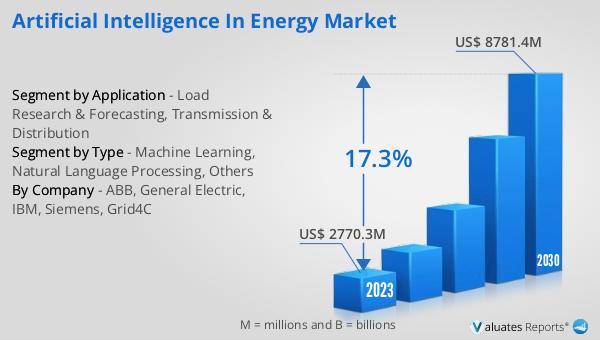
The Artificial Intelligence in Energy Market is experiencing rapid growth as utilities, grid operators, and energy companies increasingly deploy AI technologies to improve operational efficiency, enhance grid reliability, and accelerate the transition toward cleaner energy systems. Three transformative trends are shaping the market: widespread adoption of machine learning for predictive analytics, increasing integration of AI into smart grid infrastructure, and growing use of AI-driven energy forecasting. These developments are helping energy providers optimize resources, reduce operational costs, and improve decision-making across generation, transmission, and distribution networks.
Machine Learning Becomes the Foundation of Intelligent Energy Operations
Machine learning is emerging as the dominant technology within the energy sector, enabling organizations to analyze large volumes of operational data and generate actionable insights. Energy companies are leveraging machine learning models to improve asset performance, forecast energy demand, and identify operational anomalies before failures occur.
This trend matters because energy infrastructure generates vast amounts of data that traditional analytical tools cannot efficiently process. Utilities benefit from improved operational efficiency, while investors see opportunities in scalable AI-driven solutions. Companies such as ABB, General Electric, IBM, Siemens, and Grid4C are expanding machine learning capabilities across energy management platforms. Future growth will be driven by increasingly autonomous energy systems powered by advanced predictive analytics.
AI-Powered Load Forecasting Enhances Grid Stability
Energy providers are increasingly adopting AI solutions to improve load forecasting accuracy and optimize electricity generation planning. Advanced forecasting models can evaluate weather conditions, consumption patterns, and grid behavior to support more efficient energy distribution.
This trend is significant because accurate forecasting reduces energy waste and improves overall grid reliability. Utilities can better balance supply and demand while minimizing operational risks associated with unexpected fluctuations. Industry leaders are integrating AI-based forecasting tools into energy management systems to support real-time decision-making. Future energy networks will rely heavily on AI-driven forecasting to manage increasingly complex power ecosystems.
Smart Grid Modernization Accelerates AI Adoption
The global shift toward smart grid infrastructure is creating strong demand for artificial intelligence technologies capable of managing interconnected energy assets. AI is enabling real-time monitoring, automated control, and predictive maintenance across transmission and distribution networks.
This trend matters because modern energy systems require greater flexibility and responsiveness than conventional grids. Grid operators benefit from improved visibility and faster issue resolution, while technology providers expand their market opportunities. Companies such as Siemens, ABB, and General Electric are integrating AI into digital grid transformation initiatives. Future grid modernization projects will increasingly position AI as a core operational technology.
Renewable Energy Integration Drives Advanced Analytics Demand
The growing adoption of renewable energy sources is increasing the need for sophisticated AI solutions capable of managing intermittent generation patterns. Artificial intelligence helps optimize the integration of solar, wind, and distributed energy resources into existing power networks.
This trend is important because renewable energy introduces greater complexity into grid management and energy forecasting. AI enables utilities to improve efficiency while maintaining network stability despite fluctuating generation conditions. Companies such as IBM and Grid4C are developing analytics platforms that support renewable energy optimization. Future energy systems will depend on AI to maximize renewable resource utilization and operational efficiency.
Investment Activity Strengthens the Energy AI Ecosystem
Investment in AI-enabled energy technologies is accelerating as utilities and technology providers seek to modernize infrastructure and improve operational performance. Strategic partnerships, digital transformation initiatives, and AI-focused innovation programs are becoming increasingly common across the sector.
This trend matters because continuous investment supports technology advancement and large-scale deployment. Energy companies gain access to more sophisticated tools, while investors recognize long-term opportunities associated with intelligent energy management solutions. Leading market participants are expanding AI research and development activities to strengthen competitive positioning. Future market leadership will be determined by the ability to combine energy expertise with advanced artificial intelligence capabilities.
| Report Metric | Details |
| Report Name | Artificial Intelligence in Energy Market |
| Accounted market size in year | US$ 3904 million |
| Forecasted market size in 2031 | US$ 11720 million |
| CAGR | 17.3% |
| Base Year | year |
| Forecasted years | 2025 - 2031 |
| Segment by Type |
|
| Segment by Application |
|
| By Region |
|
| By Company | ABB, General Electric, IBM, Siemens, Grid4C |
| Forecast units | USD million in value |
| Report coverage | Revenue and volume forecast, company share, competitive landscape, growth factors and trends |
Ans: The Artificial Intelligence in Energy Market witnessing a CAGR of 17.3% during the forecast period 2025-2031.
Ans: The Artificial Intelligence in Energy Market size in 2031 will be US$ 11720 million.
Ans: The main players in the Artificial Intelligence in Energy Market are ABB, General Electric, IBM, Siemens, Grid4C
Ans: The Applications covered in the Artificial Intelligence in Energy Market report are Load Research & Forecasting, Transmission & Distribution
Ans: The Types covered in the Artificial Intelligence in Energy Market report are Machine Learning, Natural Language Processing, Others
$2900
$4350
$5800
HAVE A QUERY?
OUR CUSTOMER

SIMILAR REPORTS